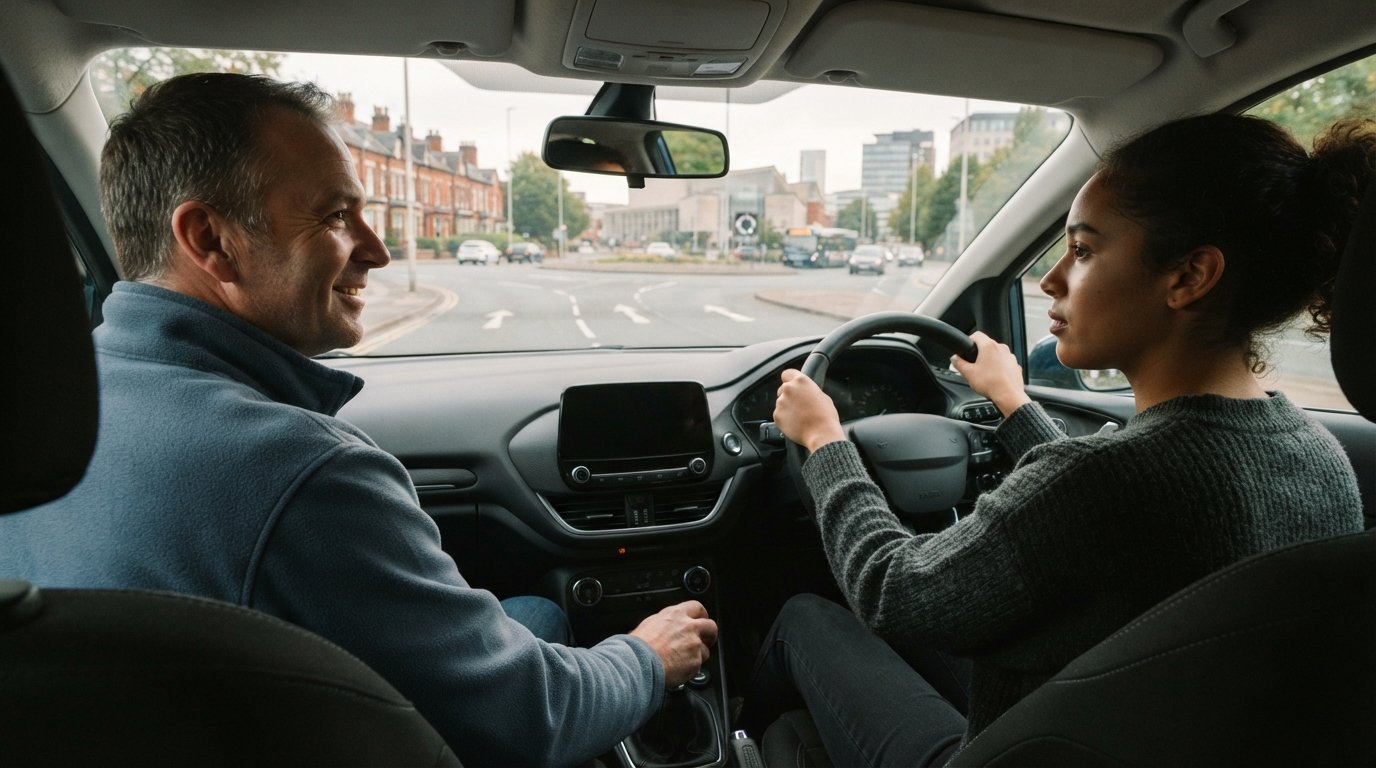
How to Build Driving Confidence in Leeds: A Step-by-Step Guide
You're sitting at the Armley Gyratory, the lights have just turned green, and for a split second, your mind goes completely blank. It's a feeling many of us know well. Whether it's the fast-moving lanes of the A61 or the pressure of a queue behind you on the Stanningley Bypass, driving in West Yorkshire can feel like a test of nerves rather than a simple commute. You aren't alone in feeling that your heart races when you approach a complex roundabout or a busy city centre junction.
Learning how to build driving confidence leeds learners need starts with understanding that your fear is valid. This guide is designed to replace that sense of dread with a feeling of quiet capability. We'll show you how to transform your anxiety into calm, safe independence using practical techniques and familiar local routes. We will explore step-by-step strategies to handle Leeds traffic, from mastering the Horsforth test routes to finding peace of mind during your daily drive to work or university.
Key Takeaways
- Understand that driving confidence is a physical skill developed through steady repetition and positive experiences rather than a natural personality trait.
- Identify quiet residential areas like Adel or Moortown to practise basic car control away from the pressure of busy Leeds bus routes.
- Learn how to build driving confidence leeds drivers need by breaking down complex junctions into the simple MSPSL routine.
- Discover mental strategies, such as controlled breathing and factual observations, to manage test nerves and stay calm at traffic lights.
- Find out why choosing a patient, one-to-one mentor who specialises in nervous learners is the most effective way to achieve safe independence.
What Is Driving Confidence and How Do You Find It?
Driving confidence isn't a fixed personality trait that you are simply born with. Instead, it is the steady, quiet belief that you can handle whatever the road throws your way. This feeling doesn't appear overnight. It grows through safe repetition and a series of positive experiences behind the wheel. If you feel a flutter in your stomach before a lesson, remember that nervousness is often just a sign that you care about being a safe driver. It shows you value the safety of yourself and others.
To effectively build driving confidence leeds learners need a structured approach that starts with simple tasks and gradually increases the challenge. By mastering basic car control in a quiet environment first, you create a foundation of trust in your own abilities. This slow, methodical progress ensures that your comfort zone expands naturally rather than being forced. When you feel secure in your technical skills, the mental pressure of traffic begins to lift.
To better understand this concept, watch this helpful video:
The Difference Between Nerves and Anxiety
It is helpful to distinguish between normal pre-test jitters and more deep-seated driving anxiety and phobias. Normal nerves might make you feel slightly restless before you start the car, but they usually fade once you begin moving and focus on the task at hand. Anxiety feels different. It can act like a physical barrier that clouds your judgment or stops you from thinking clearly. Recognising which one you are experiencing is the first step toward choosing the right way to practise. When you understand your feelings, you can work with a patient instructor to create a learning environment where you feel safe to make mistakes.
Why Leeds Can Feel Intimidating for New Drivers
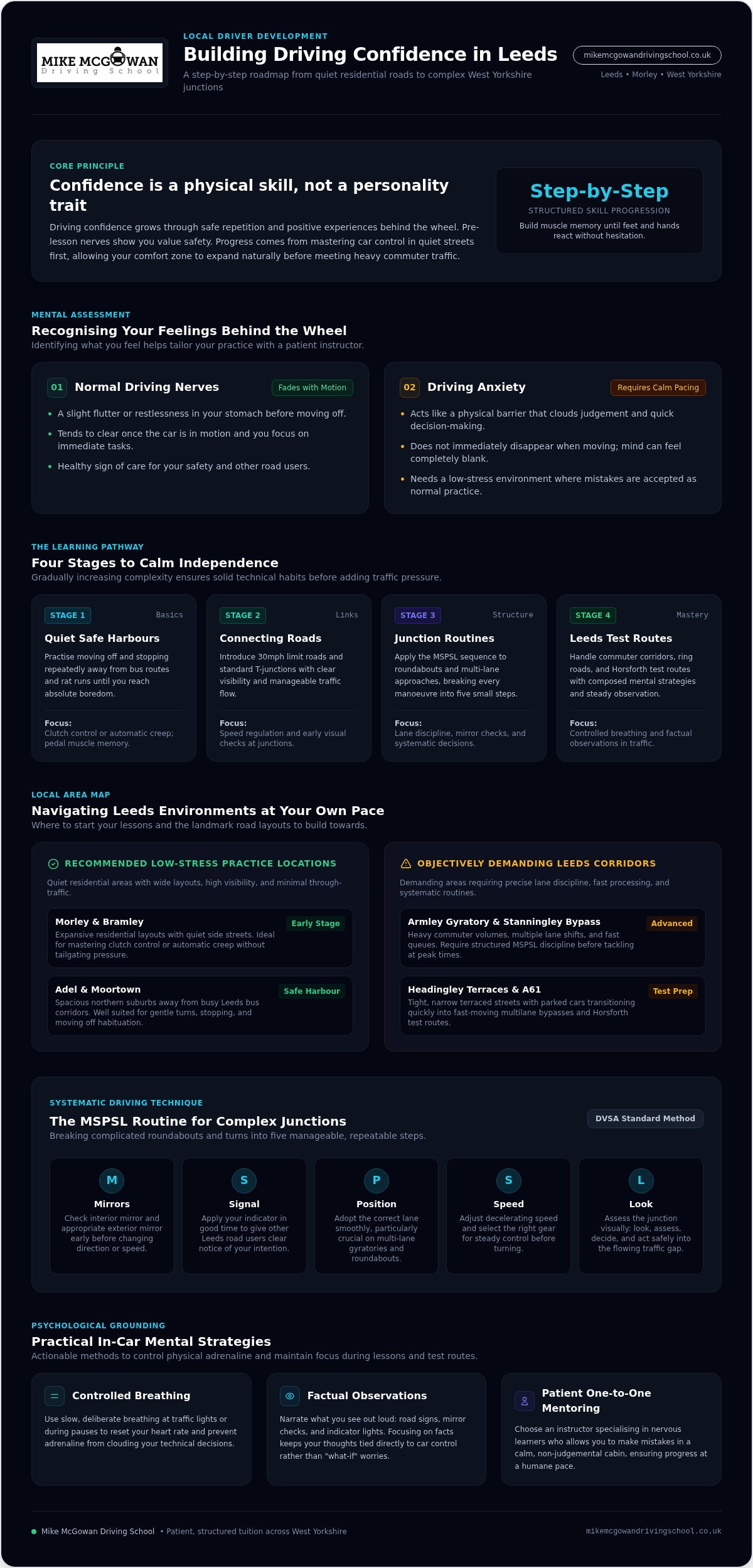
Our city presents a unique set of challenges that can test the composure of any driver. You might find yourself navigating the narrow, terraced streets of Headingley one moment and merging onto a modern, fast-moving ring road the next. Heavy commuter traffic during peak hours creates a sense of urgency that can feel overwhelming for those still finding their feet. Landmark junctions like the Armley Gyratory are particularly complex, requiring precise lane discipline and quick decision-making. Acknowledging that these environments are objectively demanding can help you be kinder to yourself. Taking the time to build driving confidence leeds wide allows you to become familiar with the unique rhythm of our local roads at your own pace.
Step 1: Start in Low-Stress Leeds Residential Areas
The first step to build driving confidence leeds learners can rely on is finding a space where you feel safe to make mistakes. You need a quiet environment, a "safe harbour" away from the pressure of the A647 or the city centre. Identify residential pockets that aren't used as "rat runs" by commuters or main bus routes. These quiet streets allow you to focus entirely on the car without worrying about impatient drivers behind you.
Focus on moving off and stopping until it becomes a physical habit. You want to reach a stage where you no longer have to think about what your feet are doing. This muscle memory is the foundation of calm driving. By staying in these low-stress zones until you feel bored, you ensure that your technical skills are solid before you add the complexity of traffic. Taking this unhurried approach is essential to build driving confidence leeds drivers need for the city's busier roads later on.
Recommended Practice Spots in West Leeds
Quiet side streets in areas like Morley or Bramley are ideal for your early lessons. Look for wide roads with good visibility and minimal parked cars to reduce the feeling of being closed in. These suburbs offer expansive residential layouts that are perfect for mastering clutch control in a manual car or understanding the "creep" of an automatic. If you find the initial stages overwhelming, starting in a familiar, quiet neighbourhood can significantly lower the stakes and help you feel more in control.
Moving From Side Streets to Quieter Main Roads
Once you feel comfortable with basic car control, you can slowly introduce roads with 30mph limits and simple T-junctions. It's often helpful to consult The Highway Code rules for roundabouts and junctions before you head out; having the theory fresh in your mind provides a sense of security. This transition should feel like a small step rather than a giant leap.
Timing is everything. Try to practise during the mid-morning or early afternoon, typically between 10:00 and 14:00. This window avoids the frantic energy of the morning commute and the afternoon school run. Always have a clear, simple route planned before you set off so you aren't trying to navigate and drive at the same time. If you feel you would benefit from a steady, professional hand during these first steps, you can book a calm introductory session to get started safely.
Step 2: Master Leeds Roundabouts and Junctions
Once you feel comfortable on quiet residential streets, the next natural step is to tackle junctions. This is where many learners feel their heart rate rise. To build driving confidence leeds drivers can lean on, we use a reliable structure called MSPSL. This stands for Mirrors, Signal, Position, Speed, and Look. By breaking every junction into these five clear steps, you stop reacting to the road and start planning for it. You are no longer guessing; you are following a calm, repeatable process.
Start small. Suburbs like Horsforth and Moortown have plenty of mini-roundabouts that are perfect for initial practice. These smaller junctions help you learn the rhythm of giving way to the right without the high speeds of the outer ring road. Reading road signs early is your secret weapon here. If you know which lane you need 100 yards before the junction, half the battle is already won. It gives you the mental space to focus on your steering and speed.
If you stall at a junction, take a deep breath. Stalling is just a pause; it is not a disaster. It happens to everyone, including experienced drivers. The car behind you can wait for a few seconds whilst you reset your feet and restart the engine. A patient mentor will help you stay calm during these moments, ensuring you follow the standards set out in the approved driving instructor regulations for safe, professional tuition.
Handling the Larger Leeds Roundabouts
Approaching larger roundabouts, such as the ones near the White Rose Centre, requires a clear plan. These multi-lane systems can look intimidating, but they follow the same logic as the smaller ones. Focus on your lane discipline and check your interior mirror frequently to stay aware of vehicles around you. If you aren't sure about a gap, wait. It is always better to stay stationary for a few extra seconds than to pull out when you feel pressured by a driver behind you. Your safety and composure are the only things that matter.
Dealing with One-Way Systems and City Traffic
The Leeds city centre loops can be confusing even for those who have lived here for years. It is best to practice these routes with an instructor first to understand the lane flows and signage. Learn to anticipate the behaviour of cyclists and the frequent stops of buses near the Headrow or Boar Lane. Keep your eyes moving to stay aware of changing traffic lights and pedestrian crossings. This constant scanning prevents surprises and helps you feel like a capable part of the city's movement.
Step 3: Mental Strategies for Driving Test Nerves
Mental resilience is the final piece of the puzzle. Once you have the technical control, your internal dialogue determines how you react to the unexpected. To build driving confidence leeds learners often need to quiet the "what if" thoughts that crop up during a lesson. A simple but effective tool is controlled breathing. When you are stopped at red lights, take a slow breath in for four seconds and out for four. This physical reset tells your nervous system that you are safe, lowering your heart rate before the lights turn green. It gives you a moment of stillness in the middle of the city's movement.
Try to replace vague fears with factual observations. Instead of thinking "I am going to make a mistake," tell yourself "I am currently in the correct lane for the ring road" or "I am keeping a safe following distance." This shifts your brain from emotional panic to logical processing. Visualisation also plays a huge role. Spend a few minutes each evening imagining yourself driving calmly through known routes, such as the areas around the Horsforth or Harehills test centres. Seeing yourself succeed in your mind makes the real experience feel familiar and manageable.
The Power of a Mock Driving Test
A mock test is not about being perfect; it is about finding where your confidence might dip under pressure. By simulating the exact conditions of a DVSA exam, you make the actual test day feel like just another lesson. Mike provides realistic mock tests tailored to the specific routes used by local test centres. This experience helps you understand the timing and expectations of the examiner in a safe, supportive environment. It turns the "unknown" into a known, repeatable task, which is vital given that pass rates at centres like Harehills can be as low as 38.6 percent due to heavy inner-city traffic.
Setting Small, Achievable Goals
It is easy to feel overwhelmed by the entire driving curriculum. You can lower the stakes by focusing on just one skill per lesson. Perhaps today is simply about mastering hill starts in the steeper parts of Burley, or perfecting a parallel park in a quiet corner of Moortown. Keeping a simple log of these successes helps you see your progress objectively. When you look back and see how many small wins you have collected, the larger goal of independence feels much closer. Celebrate every smooth junction and every calm lane change, as these are the building blocks of a capable driver.
Finding a Patient Driving Instructor in Leeds
Choosing the right person to sit beside you is perhaps the most important decision you will make in your journey. To build driving confidence leeds learners need more than just technical instruction; they need an environment of psychological safety. A patient mentor understands that your anxiety is real and that it requires a gentle, adaptive approach. Rather than following a rigid curriculum, a specialist in nervous learners will mould their teaching to fit your specific needs and pace. This steady approach is the most effective way to build driving confidence leeds drivers can rely on for a lifetime of safe travel.
Look for one-to-one tuition where you have the instructor's full attention. In a private, calm setting, you can express your concerns without judgment or the distraction of other students in the car. It is also vital to ensure your instructor is DVSA-approved and possesses expert knowledge of Leeds routes. Understanding the specific lane markings at the Lawnswood Roundabout or the traffic flow through Kirkstall and Chapel Allerton allows your instructor to provide specific, actionable advice. This local expertise prevents surprises and helps you feel prepared for the unique challenges of our city's roads.
Why Calm Tuition Matters
The atmosphere inside the car directly impacts your ability to process information. A shouting or impatient instructor will only increase your anxiety, making it harder to think clearly at busy junctions. Patient coaching allows you to make mistakes and learn from them in a controlled way. When you aren't afraid of being told off, you are free to focus on the task of driving. Mike McGowan focuses on pressure-free support, ensuring that every lesson is a positive step toward your independence. This supportive style helps to dismantle the internal barriers that might have held you back in the past.
Taking the First Step
It is a common misconception that you need to feel ready before you start. You do not have to feel 100% confident to start your first lesson. Confidence is something you build through the act of doing, not something you must possess beforehand. It is perfectly normal to feel a mix of excitement and dread before you get behind the wheel for the first time. Taking that initial step is often the hardest part of the entire process, but it is also the most rewarding.
Consider booking a single session to see if the instructor's communication style feels right for you. This low-pressure trial allows you to gauge the environment in the car before committing to a longer course of lessons. It is about finding a partner you trust to guide you through the complexities of Leeds traffic. Book an appointment with Mike McGowan to start your journey toward becoming a calm and capable driver.
Your Journey to Calm Independence Starts Here
Transforming your relationship with the road is a gradual process of discovery. You've seen that driving confidence isn't something you are born with; it's a skill you develop through steady practice and the right support. By starting in quiet residential pockets and mastering mental strategies like controlled breathing, you can dismantle the anxiety that once felt overwhelming. Every smooth junction and calm lane change is a victory that brings you closer to your goal of independent travel.
To build driving confidence Leeds learners need a supportive partner who understands the city's unique roads. Mike McGowan provides the calm, one-to-one tuition you need to flourish. As a DVSA-approved instructor and a specialist in nervous learners, Mike uses his expert knowledge of local test routes to ensure you feel prepared for every challenge. You don't have to face the city's traffic alone.
Take that first step today. Safe, quiet capability is well within your reach, and the freedom of the road is waiting for you.
Frequently Asked Questions
How many driving lessons will I need to feel confident in Leeds?
The number of lessons varies for everyone, but the DVSA recommends an average of 45 hours of professional tuition combined with 22 hours of private practice. To build driving confidence leeds learners should focus on their own progress rather than a specific timeline. Some find their rhythm after 30 hours, whilst others prefer extra sessions to feel secure on the ring road. Your instructor will help you decide when you are truly ready.
What is the best area in Leeds for a nervous driver to practice?
Quiet suburban areas like Cookridge, Adel, and Moortown are ideal for those starting their journey. These neighbourhoods offer wide residential streets and minimal foot traffic, making them perfect for initial car control. Practising in these low-stress zones allows you to master the basics without the pressure of heavy inner-city congestion. Once you feel steady there, you can gradually move toward busier routes like the A660 with your instructor's guidance.
Can I switch from manual to automatic lessons if I am struggling with gears?
Yes, you can certainly switch. Many learners find that moving to automatic lessons removes the stress of clutch control and gear changes, especially on the hilly terrain found in areas like Headingley or Harehills. Mike McGowan provides both manual and automatic tuition, so you can choose the path that feels most comfortable for you. Eliminating gear-related anxiety often allows you to focus more clearly on the road ahead and build confidence faster.
How do I stop my leg from shaking during a driving test?
Physical symptoms like a shaking leg are common responses to adrenaline. To manage this, try box breathing before you start the engine; breathe in, hold, and exhale for four seconds each. If it happens whilst driving, try to plant your heel firmly on the floor to stabilise the movement. Remind yourself that the examiner is there to ensure safety, not to catch you out. Focusing on factual observations about your surroundings can also help ground your thoughts.
Are Leeds driving test routes harder than other cities?
Leeds routes aren't necessarily harder, but they are unique due to the city's complex junctions and varying traffic density. For instance, the Harehills test centre has a lower pass rate of approximately 38.6 percent due to tight terraced streets and heavy inner-city flow. In contrast, Horsforth's pass rate is around 50 percent, which is on par with the national average. Understanding these specific local challenges is key to feeling prepared on the day.
What should I do if I stall my car at a busy Leeds junction?
Stalling is a normal occurrence and not an automatic fail. If it happens at a junction like the Armley Gyratory, keep your composure. Apply the footbrake, depress the clutch, and restart the engine. Take a quick look in your mirrors to ensure it is still safe to proceed before moving off again. Most drivers behind you will be patient if they see you are handling the situation calmly and safely.
Does Mike McGowan offer refresher lessons for people who already have a licence?
Mike McGowan offers dedicated refresher lessons for full licence holders who may have taken a break from driving. These sessions help you build driving confidence leeds drivers need to navigate the city centre loops or the M621 safely. Every lesson is tailored to your specific concerns, providing a pressure-free way to regain your independence. It is a reliable way to ensure your skills remain sharp and your anxiety stays manageable on today's busy roads.
Disclaimer
This article is intended as general guidance for learner drivers and does not replace official DVSA advice or a lesson with a qualified instructor. Rules, test requirements, and local test centre procedures can change, so always check GOV.UK or speak to your instructor for the most current information. Mike McGowan Driving School accepts no responsibility for outcomes based solely on the content of this article.
