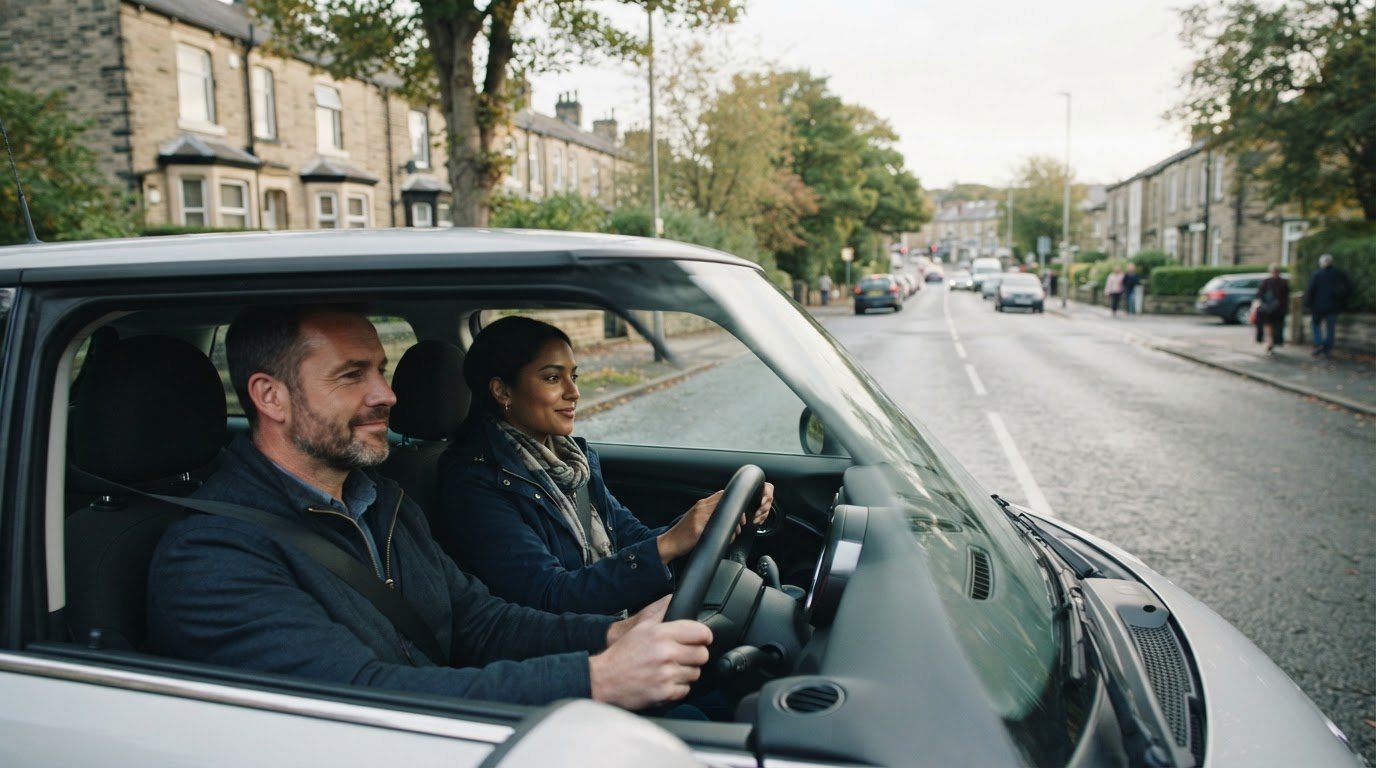
How to Overcome Driving Anxiety in Leeds: Practical Steps That Help
What if feeling nervous behind the wheel doesn’t mean you’re not cut out to drive? If you’re searching for “how to overcome driving anxiety leeds”, start by identifying what sets off your nerves, then work on it in manageable stages.
It’s understandable to worry about making mistakes in front of an instructor or other road users. Leeds traffic, busy junctions and unfamiliar routes can feel like a lot to take in, and a previous test failure can knock your confidence. But one difficult lesson or test doesn’t decide what you’re capable of learning.
This guide will help you identify what’s behind your anxiety and prepare for lessons in a way that feels more manageable. You’ll find practical steps for handling a difficult moment and building confidence gradually, whether you’re learning in a manual or automatic car. We’ll also look at how calm, one-to-one support can give you room to discuss concerns and practise at your own pace. You don’t need to get everything right straight away. Progress can start with one step you feel ready to take.
Key Takeaways
- You don’t need to feel completely calm before learning. Small, manageable steps can help you become more familiar with being behind the wheel.
- Before a lesson, name one concern and tell your instructor what you’d like to focus on. You don’t need to explain it perfectly.
- To work out how to overcome driving anxiety in Leeds, identify what feels difficult, note what becomes easier and gradually practise more challenging situations.
- A difficult lesson or a failed test doesn’t mean you have to start again. Discuss the pace, feedback and specific roads or manoeuvres that are worrying you.
- Mike McGowan Driving School offers one-to-one manual and automatic lessons in Leeds, with coaching tailored to your pace.
Driving anxiety in Leeds: what it can feel like and why it happens
You can learn to drive while feeling nervous. Complete calm isn’t a prerequisite. Anxiety is easier to work with when you identify what sets it off and practise in small, manageable steps.
Driving anxiety describes worry or unease connected with driving. People use the phrase to describe everyday nerves, not necessarily a clinical diagnosis. It can feel like tension, racing thoughts, dread before a lesson or replaying a mistake afterwards. The experience is personal, and it doesn’t prove you’re incapable of learning.
This video gives an overview of approaches to driving phobia and anxiety:
The Driving phobia overview discusses the term and related experiences. Reading about it may help you find words for what you feel, but it isn’t a way to diagnose yourself.
What can trigger nerves behind the wheel?
Sometimes the worry starts before you set off. You might feel tense on the way to a lesson, imagine making a mistake or dread being watched by other road users. That anticipation is different from nerves that arise during a particular task, such as moving off on a hill or approaching a busy junction.
Triggers differ from learner to learner. In Leeds, busy traffic, unfamiliar streets and complex junctions can feel demanding, especially when you’re still getting used to controlling the car. Manoeuvres, stalling, instructor feedback or the thought of a test can also bring nerves to the surface. Name the specific situation, such as meeting traffic or reversing into a space. That gives you and your instructor something clear to discuss and practise.
Does feeling anxious mean you are not suited to driving?
No. Nerves are a feeling, not a verdict on your ability. They don’t automatically mean you’re a poor driver, either. What matters is practising at a pace that lets you focus, learn and build skills safely.
One difficult lesson isn’t a final judgement. Skills develop through supported practice, including lessons where something doesn’t go to plan and you get another chance to understand it. If you’re looking into how to overcome driving anxiety in Leeds, start by noticing what feels hardest rather than expecting yourself to manage every road or manoeuvre at once.
For local information about driving lessons in Leeds, you can see what support is available. You don’t have to decide anything straight away. A first step can simply be putting your main concern into words.
How to manage driving anxiety before, during, and after a lesson
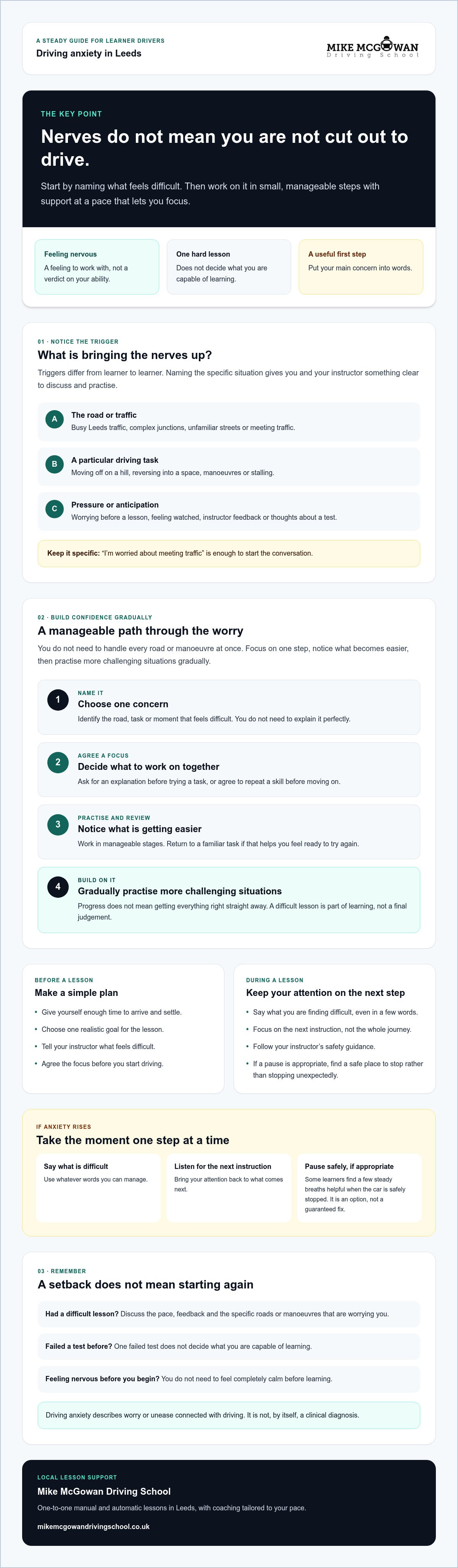
A simple plan can make a lesson feel more manageable: choose one concern, agree a small focus with your instructor, practise it, then review what felt easier. You don’t need to solve every worry in one drive. If you searched “how to overcome driving anxiety leeds”, begin with one step you can discuss before setting off.
How can you prepare for a lesson when you feel nervous?
Give yourself enough time to arrive and settle, then choose one realistic goal. It could be practising a particular manoeuvre or talking through what makes busy junctions feel difficult. Tell your instructor in your own words. “I’m worried about meeting traffic” is enough to begin the conversation.
Agree what you’ll focus on before you start driving. You might ask for an explanation before trying a task, or ask to repeat a skill before moving on. Your instructor can help keep the session at a manageable pace and return to a familiar task if that would help you feel ready to try again.
What can help when anxiety rises in the car?
Say what you’re finding difficult, even if you can only manage a few words. Then bring your attention back to the next instruction rather than trying to think through the whole journey at once. Follow your instructor’s safety guidance. If a pause is appropriate, they can help you find a safe place to stop rather than stopping unexpectedly.
Some learners find it helpful to pause and take a few steady breaths when the car is safely stopped. This is an option, not a guaranteed fix. If anxiety keeps affecting your ability to drive safely, read the official government guidance on anxiety for information about driving and health.
How can you review a difficult lesson?
After the drive, name one thing that felt difficult and one thing that became easier with practice. Keep the review specific: perhaps you understood an instruction more quickly or felt more settled repeating a task. A hard moment doesn’t cancel out the learning around it.
A simple lesson routine:
- Before: Name one concern and agree a manageable focus.
- During: Practise, speak up if you feel overwhelmed and follow safety guidance.
- After: Notice what felt easier and choose what to revisit next time.
One-to-one lessons can give you room to discuss concerns and practise at your pace. If you’d like to ask about a lesson, you can make an appointment enquiry when you feel ready.
How to overcome driving anxiety in Leeds: build confidence without rushing
Confidence doesn’t have to come before practice. It can grow as you become familiar with one skill or situation at a time, at a pace that lets you take things in. If you’re looking for ways to feel less anxious about driving in Leeds, aim for steady progress, not a lesson where you feel fearless from start to finish.
Start with tasks that feel more familiar, then build towards situations that bring up more nerves. That could mean getting comfortable with basic observations and car control before practising busier traffic, unfamiliar junctions or roundabouts. Repeating a skill can make it feel less new, but there’s no set number of lessons that suits everyone.
How can learners make unfamiliar Leeds roads feel more manageable?
Break a drive into smaller things to focus on. Rather than thinking, “I have to manage this whole journey”, focus on the next instruction and the skills it needs: checking observations, choosing a suitable position or responding as traffic changes.
Before trying an unfamiliar situation, ask your instructor to explain what to expect and what you’ll be practising. You can work on traffic, junctions and roundabouts as separate themes, then bring those skills together when you feel ready. Local familiarity can help too. The Leeds driving area information explains more about lessons in the area.
What if you stall, make a mistake, or need to repeat a skill?
A stall or missed instruction can feel uncomfortable, especially if you’re worried about holding up other road users. But one mistake is information, not proof that you can’t drive. Once the situation is safe, your instructor can help you understand what happened and decide whether to try that skill again or return to something familiar first.
For example, if a manoeuvre feels confusing, ask which part needs more practice. It might be the observations, steering or timing, rather than the whole manoeuvre. Breaking it down makes the next attempt clearer and gives you a specific question to take into your next lesson.
If test-route anxiety is your main concern, focus on the driving skills involved rather than trying to memorise a route. Practising varied situations with your instructor can help you become more comfortable responding to what’s in front of you. Take it one step at a time and ask to repeat a task if you need more practice to understand it.
When driving anxiety affects lessons, tests, or choosing an instructor
A failed test or difficult lesson doesn’t mean you have to start again from the beginning. It can show that some parts of driving need more practice or a different approach. Try to separate the result from how you see yourself: one test is not a verdict on your future ability.
How can you handle driving-test nerves or a previous fail?
Before planning your next lesson, think about what felt uncertain. Was it a particular manoeuvre, responding to instructions or keeping your focus when you felt under pressure? Naming the concern gives you something practical to discuss instead of carrying a general fear that everything will go wrong again.
Ask your instructor to help you make a plan around those areas. You can practise skills that need attention and talk through what would help you feel more prepared. Test preparation can support that work, but it can’t guarantee a result. Your progress is still yours, whatever happened last time.
How can you tell whether an instructor’s approach suits you?
You should be able to say what helps you learn. Explain if you need instructions broken down, feedback given in a different way or more time to get comfortable with a task. You don’t need a perfect explanation. A calm conversation can help you and your instructor understand what to adjust.
Patient, personalised teaching can give you room to raise concerns and practise at a manageable pace. It isn’t a guaranteed cure for anxiety, but feeling listened to and understanding what you’re working on can make lessons easier to approach. For ideas on what to look for, read this calm instructor guide for nervous learners.
Changing instructors is also an option if communication or teaching style doesn’t feel right. It’s understandable to worry about losing progress or having to explain everything again. Before making a change, ask about practical arrangements, including lesson costs, availability and how your current learning will be discussed. These details differ, so check them directly with the instructors involved.
Parents can help by listening first. Instead of asking when you’ll pass or comparing your progress with someone else’s, ask what felt easier and what you’d like to practise next. Encouragement without pressure can help keep the focus on learning.
If driving nerves are making it hard to know what to do next, write down one concern and one question you’d like to ask. That gives you a clear starting point for a conversation about support that fits.
A calm next step: choose support that fits your driving anxiety
You don’t have to decide everything today. Start by naming the situation that worries you most, such as busy traffic, a manoeuvre or receiving feedback. Then choose one question to ask. After that, you can decide whether discussing a lesson feels like the right next step.
This is a practical way to approach how to overcome driving anxiety in Leeds without putting pressure on yourself to feel ready for everything at once. You can talk things through first, take time to compare your options or ask someone you trust to help you think it over.
What should you ask before booking a first lesson?
Ask how the instructor adapts a lesson when a learner feels nervous. You could also ask how they explain unfamiliar tasks and what happens if you need to repeat something or slow the pace. These questions help you understand whether their approach feels comfortable for you.
Mike McGowan Driving School provides one-to-one automatic and manual lessons in Leeds, with calm, personalised coaching from a DVSA-approved instructor. Neither type of car is right for everyone. Ask which option fits your needs and preferences, and check lesson costs and practical arrangements directly before booking.
What is a manageable first step if you are not ready to book?
Write down one situation that causes worry and what would help you feel supported. For example, you could note that busy junctions feel difficult and that you’d like clear explanations before practising. You can share this with a trusted person or an instructor without committing to a lesson timetable.
If anxiety is affecting other parts of your life as well as driving, consider speaking with an appropriate health professional. You don’t need to diagnose yourself to ask for support. Driving lessons can help you practise driving skills, but they aren’t a substitute for professional help with wider wellbeing concerns.
A first conversation can simply help you understand your options. If you feel ready to discuss a lesson, you can ask about booking a driving lesson.
Take your next step at a pace that feels right
Learning to manage driving nerves doesn’t mean waiting until you feel fearless. Start by naming what worries you, then focus on one skill or situation at a time. A difficult lesson or previous test result doesn’t decide what you can learn next.
If you’re working out how to overcome driving anxiety in Leeds, choose support that lets you speak openly about your concerns and learn at a pace that suits you. Mike McGowan Driving School offers one-to-one automatic and manual lessons in Leeds, with calm, personalised coaching from a DVSA-approved instructor. You can ask about the approach and practical arrangements before deciding whether to book.
There’s no need to have everything figured out before you begin. One manageable step is enough to keep moving towards feeling steadier behind the wheel.
Frequently Asked Questions
Can driving anxiety be overcome?
Many people can work towards feeling more comfortable through gradual, supported practice, though anxiety doesn’t always disappear completely. Start by noticing what brings it on, such as busy traffic, a particular manoeuvre or test pressure, then discuss that trigger with your instructor. You can work on one concern at a time without setting a deadline. If anxiety feels intense or affects other parts of your life, speak with a suitable health professional.
How do I calm down before a driving lesson?
Give yourself enough time to arrive and settle, then choose one realistic goal for the lesson. Tell your instructor what feels difficult, even if you’re not sure how to explain it. Some learners find steady breathing helpful as a way to ground themselves, but it isn’t a guaranteed treatment. You don’t need to arrive feeling completely confident. You can begin by talking through what would make the session manageable.
Is it normal to feel nervous when learning to drive?
Yes, feeling nervous is a common concern for learners. New tasks, busy traffic and being observed can all feel demanding while you’re still building experience. Feeling anxious doesn’t establish whether you can learn to drive. Try describing the part that feels hardest, whether that’s meeting traffic or practising a manoeuvre, and ask to work on it at a manageable pace. You don’t have to get everything right in one lesson.
What should I do if I panic during a driving lesson?
Tell your instructor as clearly as you can what you’re experiencing, and follow their safety guidance. They can help decide what to do next based on the situation. Don’t stop suddenly or somewhere unsafe. Once the lesson is over, talk through what happened and what felt difficult. You and your instructor can then agree how to approach a similar situation in a supported way, perhaps by revisiting the skill in a suitable setting.
Can I change driving instructors if I feel anxious?
Yes, you can consider whether your instructor’s communication, teaching style and pace suit you. If you feel comfortable, explain what isn’t working and ask whether lessons can be adjusted. If you decide to switch, check practical arrangements directly with the relevant school, including any costs or existing booking commitments. A different instructor can offer a different approach, but changing instructors can’t guarantee that your anxiety will go away.
How can I feel more confident driving in Leeds?
Build familiarity gradually with an instructor, starting with skills that feel manageable and progressing when you’re ready. You can practise general situations such as traffic, junctions and roundabouts without trying to tackle everything at once. Ask for a clear explanation before trying something unfamiliar, and request another go if a skill hasn’t settled yet. Confidence develops differently for each person, so focus on the next step that feels within reach.
Will a failed driving test make my anxiety worse?
A disappointing result can affect your confidence, but it doesn’t decide whether you can drive successfully in future. Give yourself time to look at any feedback calmly, then identify the specific skills you want to practise. Talk them through with your instructor and agree a manageable next step, such as revisiting a manoeuvre or working on a particular driving situation. There’s no fixed timeline for feeling ready to try again.
Disclaimer
This article is intended as general guidance for learner drivers and does not replace official DVSA advice or a lesson with a qualified instructor. Rules, test requirements, and local test centre procedures can change, so always check GOV.UK or speak to your instructor for the most current information. Mike McGowan Driving School accepts no responsibility for outcomes based solely on the content of this article.
