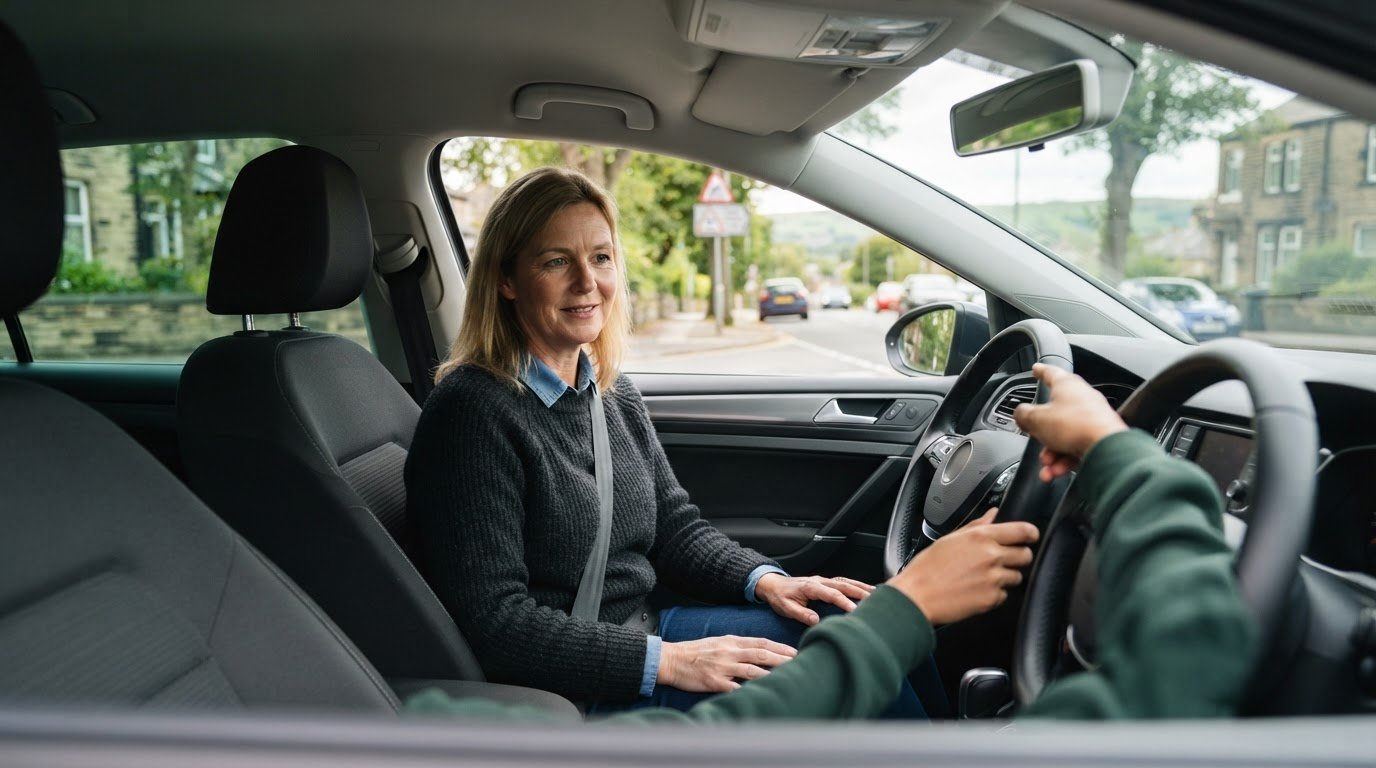
How to Recognise a Safe Driving Instructor in Leeds: A Learner’s Checklist
A safe driving instructor in Leeds helps you build judgement, not just practise test manoeuvres. You should feel listened to, understand what you’re practising and be able to learn at a steady pace. You shouldn’t feel judged for needing more practice or pushed into busy traffic before you’re ready.
Nerves about junctions, roundabouts or making a mistake are common. It’s also reasonable to think about lesson costs and how long learning will take. These depend on your experience and progress, so look for clear conversations about the lesson plan and what you’re working towards.
Mike McGowan Driving School offers calm, personalised one-to-one lessons in Leeds. This checklist explains what supportive teaching looks like, how to judge whether the pace feels right and how practice can build confidence on local roads. You’ll finish with practical questions to use in your lessons.
Key Takeaways
- A safe driving instructor in Leeds should listen, explain the next task clearly and give respectful feedback.
- Notice whether unfamiliar skills are broken into manageable stages, with time to understand each step.
- Use the checklist to reflect on whether the lesson’s pace suited you, not to judge yourself.
- Build confidence gradually by practising manageable situations before moving on to busier traffic, junctions and roundabouts.
- One-to-one beginner, automatic, manual and refresher lessons can be shaped around your experience and learning needs.
What makes a safe driving instructor in Leeds?
A safe driving instructor in Leeds helps you understand what’s happening around the car, not just what to do with the controls. You should know what you’re practising, receive clear feedback and have time to learn without being rushed through manoeuvres or promised a test result.
Driving asks you to notice and respond to changing situations. Good formal driver's education helps you build the knowledge and judgement needed to make safer decisions. Calm coaching also gives you room to ask questions and learn from a mistake without feeling blamed.
Observation is one part of that learning. This video focuses on its role in safe driving.
What does a safe lesson feel like?
Before a new task, your instructor should explain what you’re working on and give clear directions. You should feel able to ask if something isn’t clear. Questions are a normal part of learning.
If you make a mistake, useful feedback explains what happened and what to try next. It should help you correct the issue without blame. By the end of the lesson, you should know what you practised and have a clear idea of what comes next.
Why does local knowledge matter for Leeds learners?
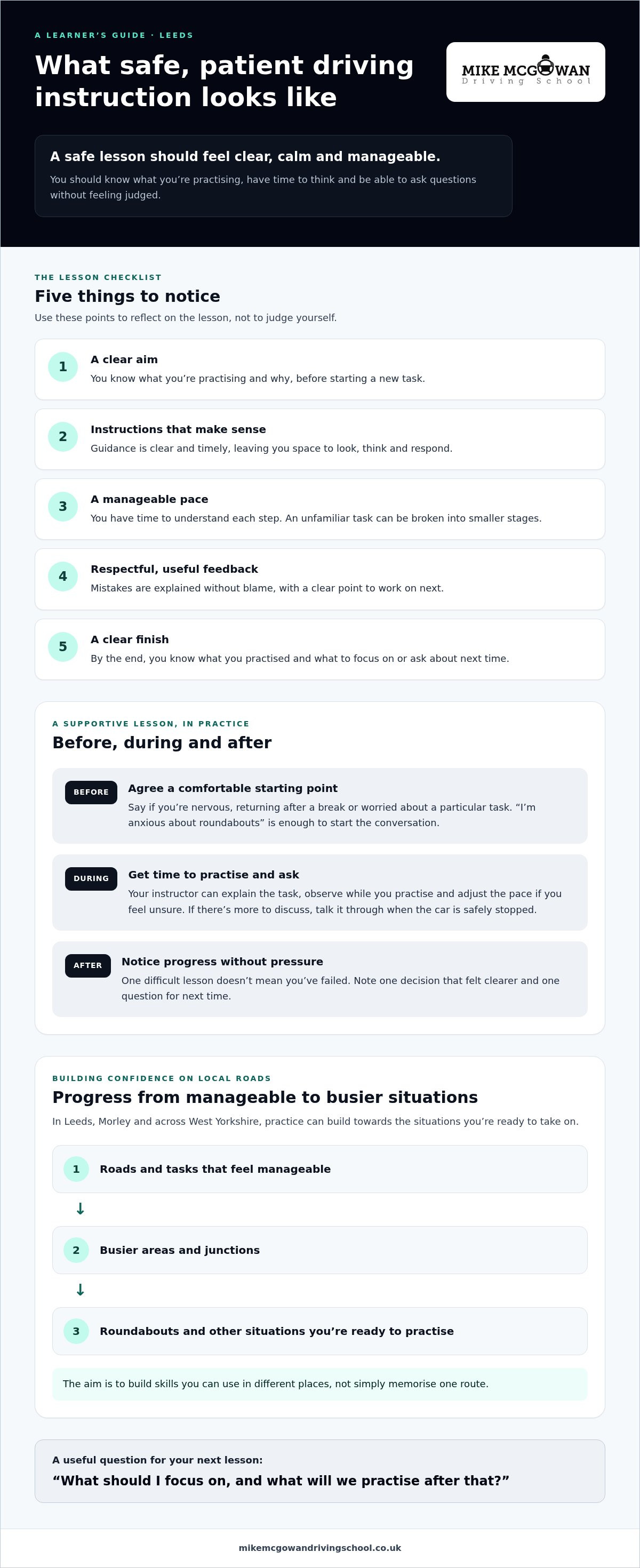
Leeds, Morley and the wider West Yorkshire area offer a range of driving situations to practise. Lessons can build from roads and tasks that feel manageable towards busier areas, junctions and roundabouts. The aim is to develop skills you can use in different places, not simply memorise one route.
With one-to-one lessons, coaching can reflect your experience and the situations you’re ready to practise. Find details about driving lessons in Leeds. A useful question for your next lesson is: “What should I focus on, and what will we practise after that?”
What safe, patient driving instruction looks like during a lesson
Safe teaching is something you can notice. A safe driving instructor in Leeds gives clear directions at the right time, stays calm and pays attention to how you’re managing the task. You need room to look, think and make decisions, not a stream of instructions that leaves you overloaded.
For an unfamiliar task, your instructor can break it into smaller stages. Before a junction, for example, they can explain what to focus on, then give you time to practise while they observe. If you feel unsure, they can adjust the pace or explain the task again. Progress is individual, so a fixed lesson count can’t tell you whether you’re ready to move on.
Clear communication before and during a driving task
Before you start, expect a short explanation of the task and what to watch for. Instructions while driving should be clear and timely, leaving you space to observe and respond. Your instructor can check your understanding calmly, without making you feel as if you’re being tested.
If there’s more to explain, your instructor can wait until the car is safely stopped. That gives you a chance to talk through what happened without trying to listen and handle the car at the same time.
How patient feedback supports safer decisions
Useful feedback is specific. After a junction, your instructor might say, “You looked carefully before moving. Next time, let’s take a little longer to judge the gap.” This recognises what went well and gives you one clear point to work on, without turning a mistake into criticism.
That kind of review helps you connect what you noticed with the decision you made. With practice, you can become better at spotting what needs attention and planning your next move. Progress isn’t a race. A useful lesson leaves you knowing what to practise next.
Mike McGowan Driving School provides one-to-one lessons with a DVSA-approved instructor. You can read more about the instructor and use the official GOV.UK service to find a DVSA-approved instructor. If you’d like to discuss your learning needs, you can book an appointment.
A learner’s checklist for recognising safe driving instruction
Use this checklist to reflect on the lesson, not to score yourself. A safe driving instructor in Leeds should make it possible to ask questions, understand the next step and talk openly about what feels difficult.
Professional conduct matters too. The official code of practice sets out standards for instructors’ personal and business conduct. During your lesson, notice whether:
- There’s a clear aim: Did you know what you were practising and why?
- Instructions made sense: Could you follow the guidance without feeling overloaded?
- The pace was manageable: Did you have time to think and respond?
- Feedback was respectful: Were mistakes explained without blame, with a useful next step?
- The lesson ended clearly: Did you know what to practise or ask about next time?
Before the lesson: agree a comfortable starting point
Tell your instructor if you’re nervous, returning to driving after a break or worried about a particular task. You don’t need a long explanation. “I’m anxious about roundabouts” or “I haven’t driven for a while” is enough to set a useful starting point.
Beginners and returning learners often need different things. If you’re new to driving, you might want time to get used to the car. If you have experience, you could revisit a task that now feels uncertain. Say what’s worrying you early so the lesson can focus on what would help you feel more settled.
After the lesson: notice progress without pressure
One difficult lesson doesn’t mean you’ve failed. A busy moment, a missed instruction or a manoeuvre that needs more practice gives you and your instructor information for planning the next step. You don’t have to master everything at once.
Afterwards, note one decision that felt clearer and one question for next time. You might feel more confident checking for a safe gap but still want to talk through when to move at a junction. A calm review turns the lesson into a practical goal. Focus on what’s becoming clearer for you, rather than comparing your progress with someone else’s.
How safe lessons build confidence on Leeds roads
Confidence grows as you learn to handle one demand at a time. A safe driving instructor in Leeds won’t expect everyone to follow the same sequence. Practice can start with situations that feel familiar, then build towards busier traffic as your observation and decisions become steadier.
For example, you could work on noticing what’s happening around you on a quieter stretch before practising similar observations in busier Leeds traffic. City-centre driving, junctions and roundabouts each bring different things to pay attention to. These are examples of skills to build, not a promise that every lesson will follow a particular route.
A gradual approach to busy roads and junctions
It can help to break a challenging situation into three parts: prepare, act, review. Before approaching a junction, talk through what to look for and what decision you’ll need to make. During the approach, focus on observing and responding. Afterwards, review what you noticed and what you could try next time.
Repeat the process until the situation feels more familiar. Pausing to explain something or practise it again isn’t a setback. It gives you time to understand what’s happening before adding more traffic pressure. Your instructor can adjust the next step to suit how you’re managing that day.
What to do when nerves rise during a lesson
If the traffic feels overwhelming or you’ve lost track of an instruction, tell your instructor as soon as it’s safe. You don’t need to hide your nerves or push through in silence. Your instructor can help you settle, then return to a familiar task before you try the more demanding one again.
After a tricky moment, name what felt difficult. Was it spotting a gap, keeping track of other road users or having several things to think about at once? That gives you and your instructor a clear focus for your next practice, without treating one anxious moment as proof you can’t do it.
Mike McGowan Driving School’s one-to-one lessons in Leeds offer calm, personalised coaching. Read more about driving lessons in Leeds, and make a note of the situation you’d like to feel more confident with next time.
Learning safely with Mike McGowan Driving School in Leeds
A safe driving instructor in Leeds should help you feel heard, explain each task clearly and make space for steady progress. At Mike McGowan Driving School, one-to-one lessons give the instructor time to focus on your questions, experience and confidence as you learn.
Lessons are available for beginners, automatic and manual learners, and people returning to driving who want refresher tuition. The starting point can reflect what you already know. If you’re new to driving, take time to get comfortable with the car and basic skills. If you’ve driven before, discuss what feels uncertain and choose a useful focus for practice.
What learners can expect from one-to-one coaching
One-to-one coaching keeps the lesson focused on you. Your instructor can explain a task, watch how you approach it and give clear feedback to help you decide what to practise next. If something feels too much, say so. The lesson can respond to your confidence and progress rather than following a fixed pace.
Lessons are provided by a DVSA-approved instructor, with calm, personalised coaching to help you build the skills for driving independently. No instructor can promise a test result. The aim is to develop sound habits and give you a clearer understanding of your next steps.
Take a calm first step towards learning
Before arranging a lesson, think about your driving experience, anything that makes you nervous and what you’d like to work on first. It could be getting used to the car, practising a particular skill or returning to lessons after a break. Sharing that goal gives your first conversation a clear starting point.
You don’t need to have everything figured out before you begin. A simple, honest description of what you need helps shape a suitable first lesson. Start with one practical next step.
Take your next step at a pace that feels right
A safe driving instructor in Leeds should help you understand each task, feel comfortable asking questions and receive feedback you can use. Look for steady progress, not pressure to rush through manoeuvres or match someone else’s pace.
During lessons, notice whether you know the focus, understand what to practise next and feel treated with respect when something goes wrong. Worrying about failing your test is understandable, but a setback isn’t proof you can’t learn. It can show you what to practise next.
Mike McGowan is a DVSA-approved instructor offering one-to-one automatic and manual lessons in Leeds. Calm, personalised coaching can help you build confidence through practice, whether you’re starting out or returning to driving. There’s no promise of a particular test result, just supportive instruction focused on your learning.
If you’re ready, share your experience, any nerves and one goal for your first lesson.
Learning takes one step at a time. Begin with the task that feels right for you.
Frequently Asked Questions
What makes a driving instructor safe for a nervous learner?
A safe driving instructor in Leeds gives calm, clear guidance and adapts the lesson to your experience. You should know what you’re practising and have space to ask questions. If you make a mistake, useful feedback explains what happened and what to try next, without blame. One-to-one coaching keeps the focus on your needs, whether you’re new to driving or returning after a break.
How can I tell if my driving instructor is patient?
A patient instructor listens when you explain what feels difficult, gives you time to think and repeats an explanation without making you feel foolish. Notice whether they stay calm if you need extra practice or make a mistake. They should give feedback you can act on, rather than criticising you or rushing straight to another task. Tell them which parts of the lesson helped you feel more settled.
Can I ask my driving instructor to slow the lesson down?
Yes. Tell your instructor if the pace feels too quick, an instruction is unclear or you need more time with a task. You could say, “Could we practise that again before moving on?” A lesson should give you room to learn safely, not leave you feeling pressured to keep up. Your instructor can adjust the focus to your progress and explain the next step clearly.
Is a DVSA-approved instructor important when learning to drive?
Learning with a DVSA-approved instructor means your tuition is provided by an instructor approved by the Driver and Vehicle Standards Agency. Mike McGowan is a DVSA-approved instructor and offers one-to-one automatic and manual lessons in Leeds. Approval is useful to consider alongside how clearly the instructor explains tasks and responds to your questions. Calm teaching and clear feedback help make lessons more supportive for nervous learners.
What should I do if I feel unsafe or overwhelmed during a driving lesson?
Tell your instructor as soon as you can do so safely. Keep it simple: “I’m feeling overwhelmed. Can we pause when it’s safe?” Your instructor can help with the immediate situation, then talk it through once the car is safely stopped. You don’t need to hide your nerves. Discuss what felt difficult and agree a manageable focus for the rest of the lesson or next time.
How do driving lessons help learners feel safer on Leeds roads?
Lessons help you practise observation, planning and decision-making with support. A patient instructor can build from situations that feel manageable towards busier traffic, junctions and roundabouts as your skills develop. Learning on local roads in Leeds can help you become familiar with different driving conditions, without relying on one test route. Clear feedback after each task helps you understand what went well and what to practise next.
Can I change instructor if the teaching style is not right for me?
Yes. You can choose an instructor whose teaching style better suits your needs. If you feel comfortable doing so, explain what isn’t working, such as the pace, the way instructions are given or the feedback you receive. Think about what helps you learn best when arranging lessons with someone else. Changing instructor doesn’t mean you’ve failed. Your previous experience can still help shape a calmer, more useful way forward.
Disclaimer
This article is intended as general guidance for learner drivers and does not replace official DVSA advice or a lesson with a qualified instructor. Rules, test requirements, and local test centre procedures can change, so always check GOV.UK or speak to your instructor for the most current information. Mike McGowan Driving School accepts no responsibility for outcomes based solely on the content of this article.
