
Nervous Driver Support in Leeds: A Practical Self-Check and Support Plan
What if the first step towards calmer driving is working out what makes you nervous, rather than pushing yourself to do more? If you searched for “nervous driver support Leeds”, you’re likely looking for a practical way to feel safer without being judged. Start by noticing which situations bring up worry, then choose one manageable next step.
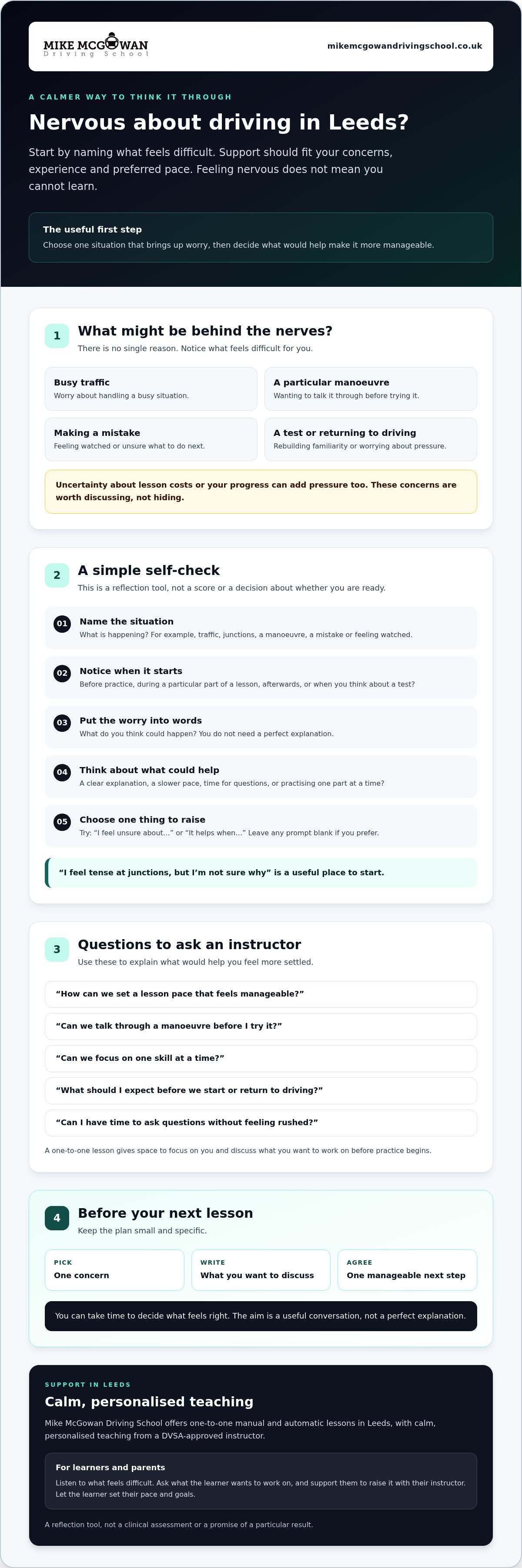
It could be busy traffic, a particular manoeuvre, making mistakes in front of an instructor or the thought of taking your test again. Uncertainty about lesson costs or your progress can add to the pressure. These concerns are worth discussing, not hiding.
This guide offers a simple self-check to help you identify your triggers and decide what support might suit you. You’ll also find useful questions to ask a Leeds instructor about lesson pace, teaching approach and what to expect before you start or return to driving. Calm, personalised instruction is one option, and you can take time to decide what feels right for you.
Key Takeaways
- Nervous driver support in Leeds should fit your concerns, experience and preferred pace, not treat nerves as a sign you can’t learn.
- Use simple prompts to name the situation that feels difficult, what you’re worried about and what could make it more manageable.
- Prepare questions to compare teaching approaches and explain what would help you feel more settled.
- Before your next lesson, choose one concern and write down how you’d like to discuss it with your instructor.
- Mike McGowan Driving School offers one-to-one manual and automatic lessons in Leeds, with calm, personalised teaching from a DVSA-approved instructor.
Nervous driver support in Leeds: what help can look like
Nervous driver support means adapting lessons to your concerns, pace and experience. It doesn’t mean you’re incapable of learning. Feeling anxious before a first lesson, after time away from driving or ahead of a test doesn’t predict how well you can drive.
Nerves can have different roots. A new learner might feel unsure about handling the car; someone returning to driving could be rebuilding familiarity; a learner preparing for a test might worry about making a mistake under pressure. These are experiences to talk through, not labels or diagnoses. This guide is a reflection tool, not a clinical assessment or a promise of a particular result.
This video from another driving school shows a Leeds-area sat nav lesson example. It offers a preview of one driving topic, not a route you need to memorise.
What nervous-driver support can include
Useful support can include calm explanations, manageable practice goals and time to ask questions without feeling rushed. In a one-to-one lesson, the instructor can focus on you and discuss what you want to work on before practice begins. Explain what feels difficult and what pace feels manageable. You could ask to talk through a manoeuvre before trying it, or agree to focus on one skill at a time.
If you want general background on what driving nerves can feel like, treat it as general information, not a way to assess or diagnose yourself. For nervous driver support in Leeds, a useful starting point is your own experience and a conversation about what might help.
Who can use this Leeds support guide
This guide is for new learners, people returning to driving and learners worried about their test. It may help if you’re looking for lessons in Leeds, even if you’re not ready to book. Mike McGowan Driving School offers one-to-one manual and automatic lessons in Leeds, with calm, personalised coaching from a DVSA-approved instructor. Read more about driving lessons in Leeds.
Parents can help by listening, asking what the learner wants to work on and supporting them to raise concerns with an instructor. Try not to set their pace or goals for them. A useful first question is, “What part of driving feels hardest right now?”
Use this self-check to identify what makes driving feel difficult
A self-check doesn’t score you or decide whether you’re ready to drive. It can help turn a vague feeling, such as “I’m worried about lessons”, into one concern you can explain and discuss. Write your answers down before or after practice when you’re safely parked, or simply think them through.
If you’re searching for “nervous driver support Leeds”, this is a calm place to start. Answer only what feels comfortable. You can leave a prompt blank and return to it another time.
Name the situation that brings up nerves
Notice when the worry appears. Is it before practice, during a particular part of a lesson, afterwards or when you think about a test? A general feeling of worry is valid, but identifying one moment can make it easier to ask for useful support.
- The situation: What’s happening? For example, driving in traffic, approaching junctions, practising a manoeuvre, making a mistake or feeling watched.
- The timing: Does the worry start before, during or after practice?
- The context: Is this a new concern, something you’ve noticed after returning to driving or a worry linked to test preparation?
- The fear: What do you think could happen? For example, getting something wrong or not knowing what to do next.
- What could help: Would a clear explanation, a slower pace, time for questions or practising one part at a time make it feel more manageable?
You don’t need a perfect explanation. “I feel tense at junctions, but I’m not sure why” is a useful start. If you have questions about whether anxiety affects your ability to drive safely, read the official DVLA guidance on anxiety.
Turn a worry into a clear support request
Once you’ve picked one concern, try finishing either of these sentences: “I feel unsure about…” or “It helps when…” For example: “I feel unsure about manoeuvres. It helps when I hear the steps explained before I try.” You could also ask for time to ask questions or discuss a pace that feels manageable.
One concern is enough to begin. You don’t need to share anything you’d rather keep private, and your answers aren’t a diagnosis. If you want to talk through your preferences before choosing a next step, you can arrange a conversation about lessons.
Choose support that matches your driving nerves, not someone else’s checklist
The right questions depend on what feels difficult for you. A school’s results or a price comparison won’t tell you whether its teaching approach suits your needs. Use your self-check to start a conversation about feedback, pace and the kind of practice that could help.
Match common worries with useful questions
Take one concern at a time. You don’t need to ask everything before you begin. These prompts can help you understand how lessons are taught and whether the approach feels comfortable.
- Worried about making mistakes? Ask, “How do you give feedback if I get something wrong during a lesson?”
- Concerned about feeling rushed? Ask, “Can we agree the lesson goals together and take things at a pace that suits my experience?”
- Nervous about your test? Ask, “What test-preparation support do you offer, and what does it cover?”
- Unsure about lesson costs? Ask for the current lesson fees directly, and check what you’ll be paying for before deciding.
Clear answers can help you judge whether you feel listened to. You’re not looking for a promise that you’ll never feel nervous or make a mistake. You’re checking whether you can raise concerns and understand the instructor’s suggestions for what to work on next.
Decide what matters when choosing an instructor
Ask how lessons can be adapted to your experience and preferred pace. If you’re returning to driving, explain what you’ve already practised and where you’d like more guidance. If you’re preparing for a test, ask how the instructor can help you work on the areas you find difficult.
Manual or automatic tuition is a practical choice to discuss, not a cure for anxiety. Consider your preference and ask what learning in each type involves before deciding. Mike McGowan Driving School offers one-to-one manual and automatic lessons in Leeds, with teaching tailored to the learner’s pace and needs.
If you’re comparing nervous driver support in Leeds, focus on whether the instructor listens, explains things clearly and is open to discussing your concerns. You can also read more about choosing a driving instructor for nervous learners in Leeds.
Build a small, realistic support plan before your next lesson
A useful plan doesn’t need a timetable or a target number of lessons. Keep it simple: choose one concern, write down what would help, then discuss it with your instructor before you practise. For example: “I’m unsure about junctions. Could we talk through what to look for before I try?”
This gives you a starting point for nervous driver support in Leeds while leaving room to adjust as you learn. Your needs can change from one lesson to the next, so treat the plan as a guide, not a test you have to pass.
Prepare for a calm conversation
Share any experience that could help the instructor understand where you’re starting from. You might mention previous lessons, time away from driving or a test attempt that left you feeling unsettled. Then say what helps you take things in, such as a clear explanation before trying something or a slower pace when learning a new skill.
If a lesson starts to feel too fast, speak up when it’s safe to do so. Ask to pause, explain what’s bothering you and agree the next step together. That could mean going over an instruction again or deciding what to focus on next.
Parents can help the learner prepare, but let them describe their needs in their own words. They should feel able to ask questions and agree their own learning goals.
Review progress without judging yourself
After a lesson, note one thing that felt easier and one question you’d like to ask next time. It could be a skill you practised, an explanation that helped or something you want to go over again. This keeps your attention on your own experience instead of comparing your progress with another learner’s.
If you’re a new learner, read about beginner driving lessons in Leeds. The school’s driving guidance articles are another place to look for practical advice. A short note before your next lesson is enough. You don’t need to have everything worked out in advance.
Find calm, one-to-one nervous-driver support in Leeds
Once you’ve thought about what feels difficult, look for an instructor you can talk to openly. Mike McGowan Driving School offers one-to-one manual and automatic driving lessons in Leeds. Its DVSA-approved instructor takes a calm, personalised approach, with lessons shaped around the learner’s experience and pace. This gives you an opportunity to raise concerns and ask questions, without any promise of a particular outcome.
What to discuss before starting or restarting lessons
You don’t need a perfect script. Keep your self-check notes nearby and share the parts that feel relevant. You could mention whether you’re new to driving, returning after a break or feeling unsettled after a test attempt. Then explain what helps you learn, such as a clear explanation before trying something or agreeing what to focus on first.
Ask which lesson type is available and whether manual or automatic tuition fits your preference and needs. The choice is practical, not a cure for nerves. If test worries are on your mind, ask what test preparation covers and how it can address the areas you want to practise. You don’t need to memorise particular routes to have a useful conversation about preparation.
If you’re comparing options after searching “nervous driver support Leeds”, look for a teaching approach that gives you space to explain what you need. Ask about lesson fees directly before deciding, so you and anyone helping with the cost know what to expect.
Take one useful next step
Bring your notes to an initial conversation, or keep them somewhere easy to find if you’re not ready to arrange lessons yet. One clear point is enough to start: “I’m worried about making mistakes, and I’d like feedback explained calmly.” You can build on that as you get to know the instructor and decide what feels manageable.
If test nerves are relevant, ask specifically about test preparation and the skills you want to work on. Keep the conversation focused on your needs, rather than expecting yourself to feel completely confident before you begin.
Take your next step at a pace that feels manageable
You don’t need to solve every worry before getting behind the wheel. Use the self-check to name one situation that feels difficult, then think about what might help you feel more settled. That gives you a clear starting point for a conversation about nervous driver support in Leeds.
Mike McGowan Driving School offers one-to-one manual and automatic lessons in Leeds. A DVSA-approved instructor provides calm, personalised coaching for nervous learners, with lessons shaped around individual needs. You can talk through your experience and preferred pace before deciding what feels right.
One honest conversation or one manageable practice goal is progress. You can take the next step when you feel ready.
Frequently Asked Questions
Is it normal to feel nervous when learning to drive?
Yes, feeling nervous is common, and it doesn’t mean you can’t learn to drive safely. Notice when the nerves appear and what might help you feel more settled. You can share this with your instructor and agree on one manageable next step. Avoid comparing your progress with someone else’s. Learners start with different experiences and concerns, so focus on what feels useful for you.
Can driving lessons help if I feel anxious behind the wheel?
Driving lessons can give you a structured place to practise and talk about what feels difficult. If you’re searching for “nervous driver support Leeds”, ask how lessons can be adapted to your needs and how the instructor explains things. Mike McGowan Driving School offers one-to-one manual and automatic lessons in Leeds with calm, personalised coaching. No instructor can promise a particular emotional response or test result.
What should I tell a driving instructor if I am nervous?
Tell them what you feel comfortable sharing. You could explain which situation worries you, whether you’ve driven before and what helps you concentrate. For example, ask for a clear explanation before trying a manoeuvre or agree a lesson goal together. You don’t need to explain everything at once. A short conversation before practice gives the instructor a useful idea of where to begin.
Can I change instructor if I do not feel comfortable?
You can look for an instructor whose communication and teaching approach feel right for you. If something isn’t working, explain what you need and ask whether the approach can change. You can also ask another instructor about their teaching style before arranging lessons. If you have lessons booked, check the existing arrangements directly with the relevant school, as terms and availability differ.
Is automatic driving tuition better for nervous learners?
Neither automatic nor manual tuition is automatically right for every nervous learner. Automatic lessons remove gear changes from the learning task, while manual lessons include learning clutch and gear control. Think about your goals and what feels comfortable, then discuss both options with an instructor. Choose the type of driving you want to learn, rather than feeling pressured by other people’s preferences.
How can I prepare for a driving lesson in Leeds if I feel anxious?
Before your lesson, write down one concern and one question. Tell your instructor what pace or type of explanation helps you concentrate, then agree a manageable focus for the session. You don’t need to resolve every worry beforehand. If you’re unsure about local arrangements, ask what the lesson will involve before setting off. Keeping your request simple can make it easier to start the conversation.
Disclaimer
This article is intended as general guidance for learner drivers and does not replace official DVSA advice or a lesson with a qualified instructor. Rules, test requirements, and local test centre procedures can change, so always check GOV.UK or speak to your instructor for the most current information. Mike McGowan Driving School accepts no responsibility for outcomes based solely on the content of this article.
