Practical Driving Test: What Happens and How to Prepare
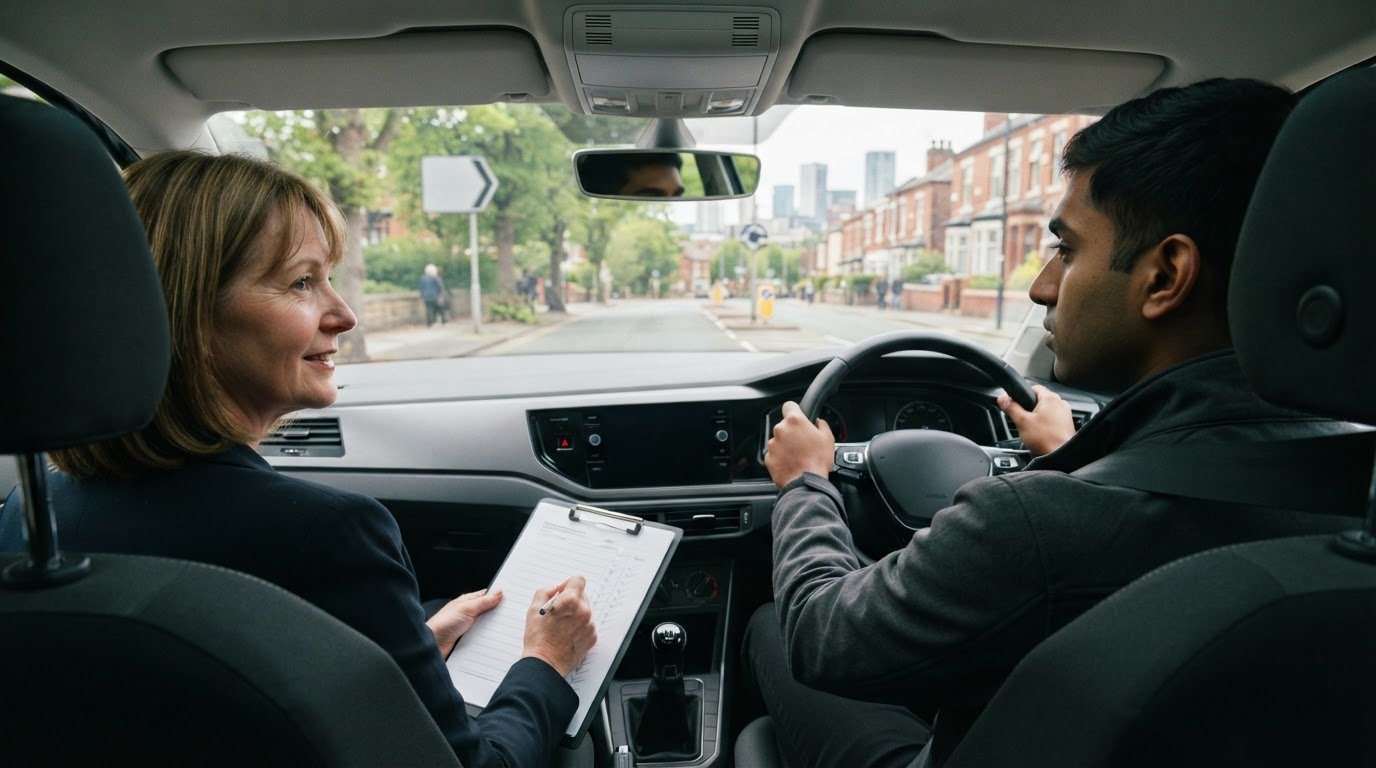
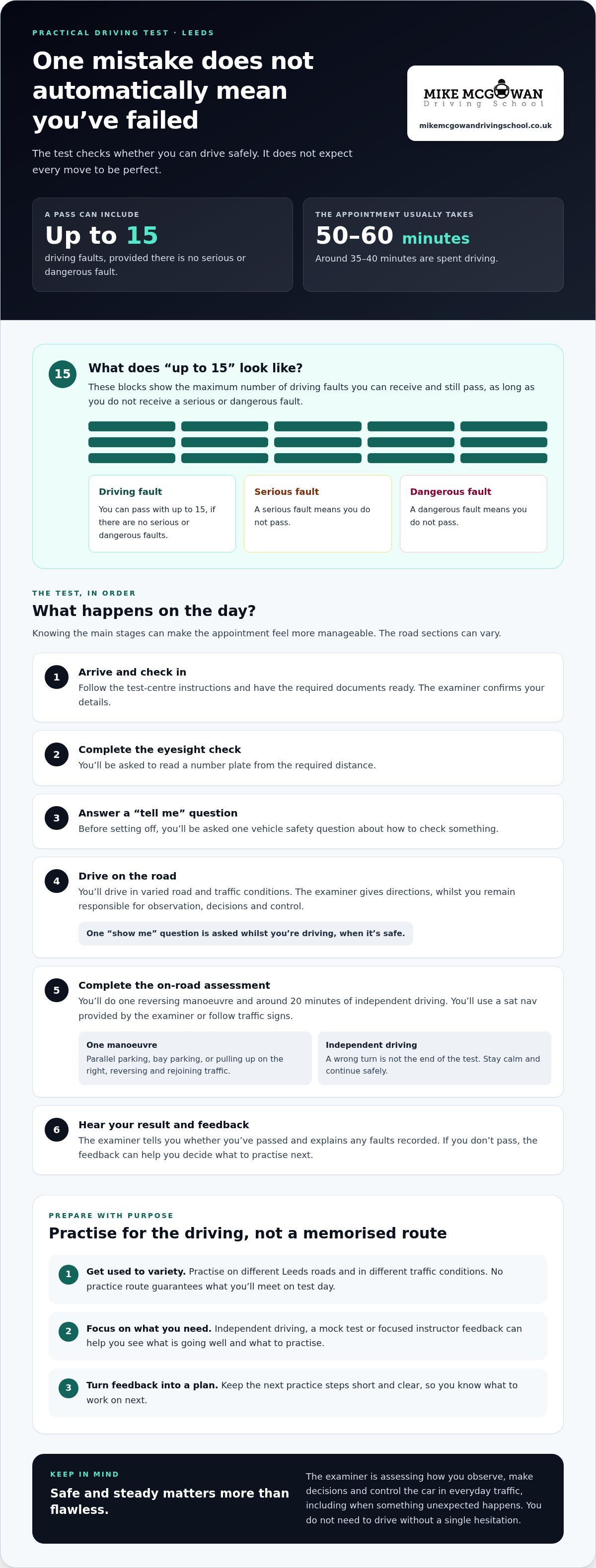
One mistake on your practical driving test doesn’t automatically mean you’ve failed. You can pass with up to 15 driving faults, provided you don’t receive a serious or dangerous fault. The test assesses safe driving, not whether every move is perfect.
It’s understandable to feel unsure about what the examiner expects, especially if you’re nervous or have failed before. The appointment usually takes around 50 to 60 minutes. It includes an eyesight check, vehicle safety questions, driving on the road, a reversing manoeuvre and independent driving.
This guide explains each stage, what the fault categories mean and how to prepare without trying to memorise Leeds test routes. You’ll also find practical ways to build familiarity with different local road and traffic conditions. A mock test or focused lesson can help you identify what’s going well and what to practise next, at a steady pace.
Key Takeaways
- Know the stages of the practical driving test, from arrival checks to hearing your result.
- Understand how driving, serious and dangerous faults affect the outcome. One small error does not automatically mean failure.
- Practise on a variety of Leeds roads and in different traffic conditions instead of trying to memorise a test route.
- Choose practice that suits your needs, such as independent driving, a mock test or focused instructor feedback.
- Turn feedback into a short, clear practice plan so you know what to work on next.
What is the practical driving test, and what does it assess?
The practical driving test checks whether you can drive safely and independently. The examiner isn’t looking for a flawless performance. They assess how you observe, make decisions and control the car in everyday traffic, including when something unexpected happens.
The Driver and Vehicle Standards Agency (DVSA) sets and conducts car driving tests in Great Britain. The test follows a set format, but you aren’t expected to reproduce a particular route. A driving test can include different assessment elements around the world. In Great Britain, the car test checks that you can drive safely without relying on your instructor’s guidance.
For a quick overview of areas to consider before test day, watch this checklist from Driving School TV:
Who conducts the practical driving test, and what is its purpose?
A DVSA examiner assesses whether your driving is safe and controlled. They look for habits such as checking properly before moving or changing direction, choosing a safe gap at a junction and responding to road conditions without being prompted.
You don’t need to drive without a single hesitation. The aim is to show that you make safe choices consistently and can respond calmly if you take a wrong turn or need to adjust.
What should learners expect from the test format?
The appointment usually takes about 50 to 60 minutes, with around 35 to 40 minutes spent driving. It starts with an eyesight check, followed by one “tell me” vehicle safety question before driving and one “show me” question while you’re on the move.
On the road, you’ll drive in varied conditions, complete one reversing manoeuvre and do around 20 minutes of independent driving. The examiner gives directions using a sat nav or traffic signs. The manoeuvre could be parallel parking, bay parking or pulling up on the right, reversing and rejoining traffic.
To prepare for the vehicle safety questions, read this Leeds driving lesson information and check the linked DVSA guidance on “show me, tell me” questions. Driving around Leeds can help you get used to changing road and traffic conditions, but no practice route guarantees what you’ll meet on test day. The aim is to practise responding safely, not to memorise a route or expect a particular result.
What happens during the practical driving test, step by step?
The appointment takes about 50 to 60 minutes, including the driving assessment, according to GOV.UK. Knowing the order can make test day feel more manageable. The road sections can vary, but the main stages are set out below.
- Arrive and check in. Follow the test-centre instructions and have the required documents ready. The examiner confirms your details before the test begins.
- Complete the eyesight check. You’ll be asked to read a number plate from the required distance. GOV.UK explains the current steps during the driving test.
- Answer a vehicle safety question. Before you set off, you’ll be asked one “tell me” question about a basic vehicle safety check. The question checks your understanding of how to check something, rather than asking you to carry out a long inspection.
- Drive in different road and traffic conditions. The examiner gives directions, but you remain responsible for observation, decisions and control. You’ll be asked one “show me” question while driving, when it’s safe to demonstrate the check.
- Complete a reversing manoeuvre and independent driving. You’ll be asked to do one manoeuvre. Independent driving lasts around 20 minutes, using a sat nav provided by the examiner or following traffic signs. If you take a wrong turn, stay calm and continue safely. The manoeuvre and independent drive can take place during the on-road assessment.
- Hear your result and feedback. At the end, the examiner tells you whether you’ve passed and explains any faults recorded. If you don’t pass, the feedback can help you decide what to practise before taking another test.
What happens before you drive away?
The eyesight check and vehicle safety questions are separate from the driving assessment. The “tell me” question comes before you set off; the “show me” question comes later, once you’re on the road. You can review the questions in this show me and tell me checklist.
What happens on the road and at the end?
The examiner’s directions help you follow the assessment, but they don’t take over the driving. Keep checking the road and choose a safe response. If you haven’t heard an instruction clearly, ask for it to be repeated. The test isn’t about finding a hidden route or getting every turn right.
If you’d like to practise the test format in a calm, structured session, you can ask about test preparation. Use the feedback to choose a clear, manageable focus for your next practice.
What counts as a fault, and does one mistake mean you have failed?
No. One small mistake doesn’t automatically mean you’ve failed your practical driving test. The examiner considers the type of fault, its impact on safety and your driving across the whole test. A minor error can be recorded as a driving fault, while a serious or dangerous fault results in a fail.
These categories have specific meanings in DVSA guidance. The What happens during the driving test page explains how your driving is assessed. The difference isn’t simply how noticeable a mistake feels to you. What matters is whether it creates a risk or actual danger.
How are driving faults different from serious or dangerous faults?
Here’s the distinction in plain terms. The examples are illustrative. The examiner judges each situation in context, including what was happening around the car and how you responded.
| Fault type | DVSA meaning | What it means for your result |
|---|---|---|
| Driving fault | An error that isn’t potentially dangerous. | You can pass with up to 15 driving faults, provided you don’t receive a serious or dangerous fault. |
| Serious fault | An error that is potentially dangerous. | One serious fault means a fail. |
| Dangerous fault | An error involving actual danger to you, the examiner, the public or property. | One dangerous fault means a fail. |
For example, a brief lapse that doesn’t create a risk could be recorded as a driving fault. Missing an important observation when another road user is affected could be more serious. Repeating a driving fault can also lead to it being assessed as serious. The examiner considers what happened in that moment, not just the name of the mistake.
What happens if you pass or fail?
If you pass, the examiner confirms the result and explains any faults recorded. A pass doesn’t mean every decision was perfect. It means your driving met the required standard, with no serious or dangerous faults and no more than 15 driving faults.
If you don’t pass, the result gives you information about what to work on. Listen to the feedback and note the specific habits or situations to practise. For instance, if observation at junctions needs work, focus your next practice on checking early and responding to what you see. A clear, manageable goal is more useful than trying to fix everything at once.
How can you prepare for your practical driving test in Leeds?
Readiness isn’t measured by a set number of lessons. It’s about whether you can drive safely and independently in different situations without needing regular prompts. Your instructor can help you review what feels consistent and what still needs practice.
How do you know when you are ready to book?
Talk openly with your instructor about repeated errors, nerves and situations that still feel difficult. A mistake isn’t a reason for shame. It’s useful information about what to work on next, whether that’s junction observation, lane choice or a particular manoeuvre.
Before booking, consider whether you can make safe decisions without your instructor stepping in, manage familiar manoeuvres calmly and respond sensibly when conditions change. If any skill is inconsistent, agree a focused practice plan. Avoid choosing a test date based only on a lesson count or a promise of readiness by a certain day.
What should you practise around Leeds before test day?
Practise a mix of road situations in Leeds and nearby areas where you drive regularly. For example, an instructor could help you practise lane choice, junctions and changing traffic conditions on roads such as the A58 or A64, where suitable for your lesson. These are practice examples, not fixed test routes. The aim is to respond safely to varied conditions, not memorise a route.
- Junctions: practise judging gaps, observing carefully and choosing the correct lane or position.
- Roundabouts: work on approach speed, lane choice and checking for other road users as you leave.
- Parking and reversing: repeat the manoeuvres you find less familiar, taking time to observe throughout.
- Independent navigation: follow directions or signs while keeping your attention on safe driving. If you miss a turn, continue safely rather than rushing to correct it.
A mock test can help you get used to driving with fewer prompts and identify specific areas to practise. Use the feedback to make a short, manageable plan. The Leeds driving lessons page has local information, and your instructor can help you choose practice that suits your experience without treating any route as guaranteed.
Keep test day straightforward
Check your booking details and the current DVSA requirements for what to bring. Plan how you’ll get to the test centre, allow time to arrive without rushing and aim to be rested. Before the day, ask your instructor what to do if you don’t hear a direction, how independent driving works and which practice points deserve a final review.
What support can help you feel ready for the practical driving test?
The most useful support depends on what’s making you uncertain. Independent practice can help you build experience between lessons, a mock test can show how it feels to drive with fewer prompts, and a focused instructor session can target one skill or situation. None guarantees a pass, but each can help make your next steps clearer.
Would a mock test or focused practice session suit you?
A mock test is useful if you want to experience a test-style drive and receive feedback on your overall driving. It can turn a general worry, such as “I’m not ready”, into something specific to work on.
Choose focused practice if you already know what’s troubling you. That could mean maintaining observations at junctions, choosing lanes confidently or completing a manoeuvre without rushing. Practise with your instructor, or arrange suitable supervised practice outside lessons. For a broader view of available lesson options, consider whether regular tuition, refresher support or test preparation would suit you best.
How can an instructor support a nervous learner?
One-to-one coaching gives you space to talk through nerves, a previous test experience or a particular road situation without being judged. Calm feedback helps you understand what happened and what to try differently next time. The aim is to make progress you can see, not to pressure you to get everything right immediately.
Ask for feedback that leads to a clear goal. Instead of trying to “get better at roundabouts”, for example, you could practise approaching at a suitable speed, choosing a lane early and checking safely as you leave. If you’ve changed instructors, explain what you’ve already covered and where you’d like support. That gives the lesson a useful starting point.
Mike McGowan Driving School offers patient, personalised one-to-one tuition and test preparation in Leeds, including mock tests and practice on local routes. Local route practice gives you experience of varied driving conditions, not a promise of the route you’ll get on test day.
Before booking, write down one or two situations you’d like to feel more settled with. That gives you a practical starting point for a conversation about what support would suit you.
Build confidence one step at a time
The practical driving test is a chance to show that you can make safe decisions independently, not deliver a perfect drive. Knowing the stages and how faults are assessed can replace guesswork with a clearer picture of what to expect.
Preparation works best when it reflects your needs. Practise a variety of Leeds road situations rather than trying to memorise a route, and use feedback to choose one or two useful goals for your next session. If nerves or a previous test are on your mind, say so. It gives your instructor a better starting point.
Mike McGowan Driving School offers one-to-one manual and automatic tuition in Leeds with a DVSA-approved instructor. Test preparation can include mock tests and local route practice, with patient coaching shaped around your pace. This is supportive preparation, not a promise of a particular result.
Keep your next step manageable. Steady practice can help you approach test day with a clearer head and growing confidence.
Frequently Asked Questions
How long does a practical driving test take?
The appointment usually takes about 50 to 60 minutes, including the time before and after driving. The driving portion lasts around 35 to 40 minutes. As of September 2026, the car test fee is £62 on weekdays before 4:30 pm, or £75 from 4:30 pm, at weekends and on bank holidays. Lesson prices are separate, so check the instructor’s current rates directly and confirm the test fee when booking.
What happens during a practical driving test?
You’ll start with an eyesight check and a “tell me” vehicle safety question. On the road, the examiner assesses your driving, asks one “show me” question and asks you to complete one reversing manoeuvre. There’s also around 20 minutes of independent driving, following a sat nav or traffic signs. At the end, the examiner tells you the result and gives feedback.
Can one mistake make you fail your practical driving test?
One driving fault doesn’t automatically mean you’ve failed. You can pass with up to 15 driving faults, provided you don’t receive a serious or dangerous fault. A serious fault is potentially dangerous; a dangerous fault involves actual danger. If something goes wrong, stay focused on driving safely rather than assuming the result is decided. The examiner assesses the full drive as well as individual incidents.
What are driving faults on a practical test?
A driving fault is an error that isn’t potentially dangerous. You can receive up to 15 and still pass, as long as there are no serious or dangerous faults. For example, a small lapse that creates no potential danger could be recorded as a driving fault. The examiner judges each situation in context, and repeating the same fault can lead to it being assessed as serious.
Can I use my instructor’s car for the practical driving test?
Yes, you can use your instructor’s car if they agree and it meets the current DVSA requirements for a test vehicle. Check with your instructor that the car is suitable, the necessary insurance arrangements are in place and you’re comfortable driving it. If you plan to use another car, check the latest GOV.UK guidance in advance rather than leaving vehicle questions until test day.
How do I prepare for a practical driving test in Leeds?
Practise a range of road situations around Leeds, including different junctions, roundabouts, lane choices and parking. The aim is to respond safely to varied conditions, not memorise a route, as the test route can vary. Ask your instructor to review how independently you drive and identify any repeated errors. A mock test can help you practise the assessment format and turn feedback into clear next steps.
What should I do if I fail my practical driving test?
Take a moment, then listen to the examiner’s feedback and note the specific areas to practise. Not passing is disappointing, but it isn’t a judgement of you as a person or proof that you can’t learn to drive safely. Talk through the feedback with your instructor and agree a focused practice plan. Book another test when you feel ready, checking current DVSA guidance for booking details.
Disclaimer
This article is intended as general guidance for learner drivers and does not replace official DVSA advice or a lesson with a qualified instructor. Rules, test requirements, and local test centre procedures can change, so always check GOV.UK or speak to your instructor for the most current information. Mike McGowan Driving School accepts no responsibility for outcomes based solely on the content of this article.
