Contact Us
07344 035280
Follow Us:

Driving Tips & Support
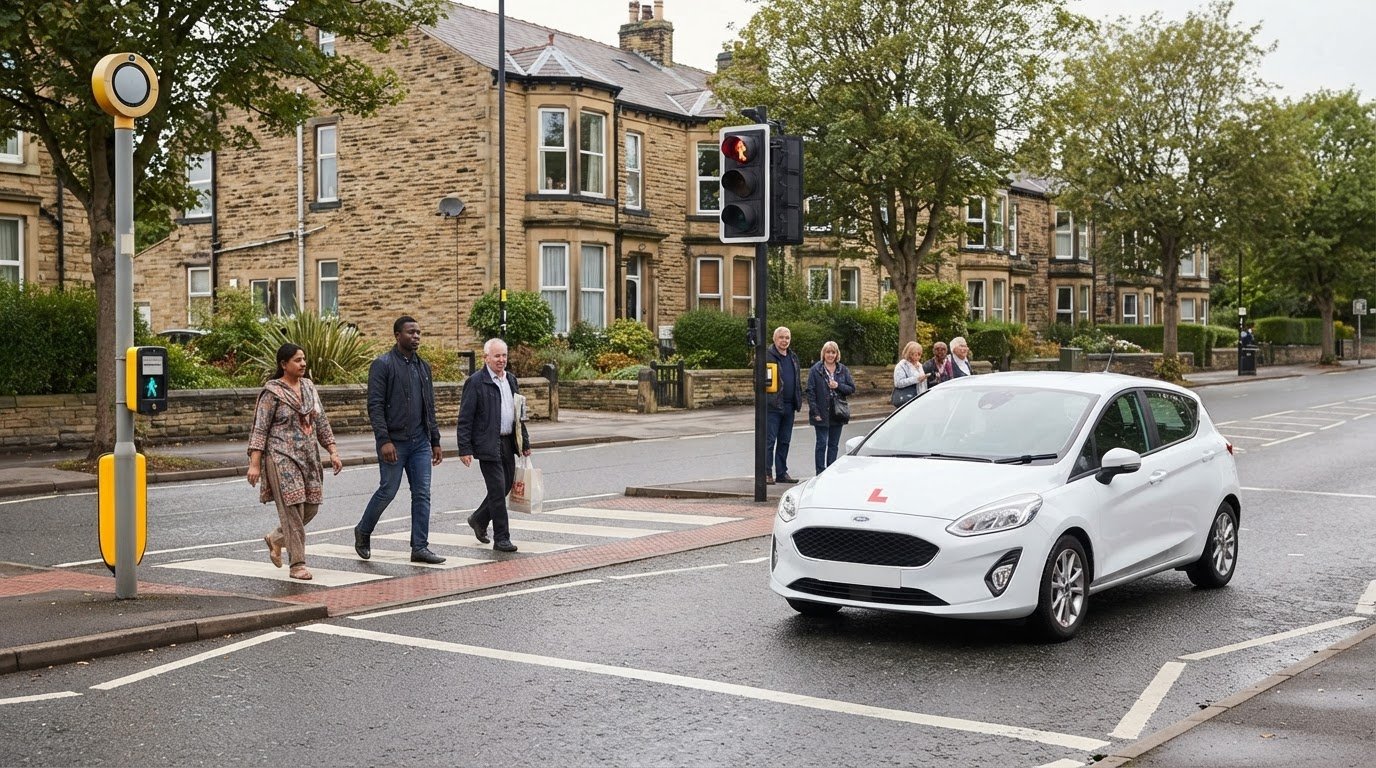
Puffin Crossing Explained: Signals, Sensors and Safe Driving
A puffin crossing can stay red while someone is still crossing, even when the road ahead looks clear. That is normal: sensors monitor pedestrian activity and help manage the crossing phase. As a driver, follow the traffic lights in front of you rather than trying to predict when they will change.
If you’re learning to drive, puffin signals can be easy to confuse with those at pelican, toucan or zebra crossings. This guide explains how to recognise a puffin crossing, what the signals mean and how to approach one safely. The clearest clue is the pedestrian signal beside the road, not across it.
There’s no need to rush when someone is still crossing. Take in the signals, watch the crossing and wait until it’s safe to move. On Leeds and Morley roads, crossings are part of everyday driving practice. Mike McGowan Driving School offers one-to-one automatic and manual lessons, with calm coaching to help you build confidence at your own pace.
Key Takeaways
- Recognise a puffin crossing by its pedestrian signal beside the road.
- Know that sensors respond to pedestrian activity, but follow the traffic lights rather than trying to judge what the sensors have detected.
- Learn the main differences between puffin, pelican, toucan and zebra crossings.
- Use a simple routine to approach the crossing, wait for the correct signal and move off safely.
- Build confidence by practising crossings during driving lessons around Leeds.
What is a puffin crossing, and how can you recognise one?
A puffin crossing is a signal-controlled pedestrian crossing. Sensors monitor pedestrian activity and help manage how long traffic is held. The easiest way to recognise one is by the pedestrian signal on the near-side control unit, beside the person waiting to cross rather than across the road.
The name comes from “Pedestrian User-Friendly Intelligent” crossing. You’ll see traffic lights facing drivers and a push-button unit for pedestrians. Sensors monitor activity at the kerb and on the crossing, helping the signals respond to whether someone is waiting or still crossing. The Puffin crossing overview explains the name and sensor-based design.
For a learner, look for the near-side pedestrian signal and the standard traffic-light sequence. Puffin crossings don’t have a flashing amber phase for drivers. Equipment can vary, so concentrate on the signals facing you and respond to those instead of trying to work out what a sensor is detecting.
Which signals will you see at a puffin crossing?
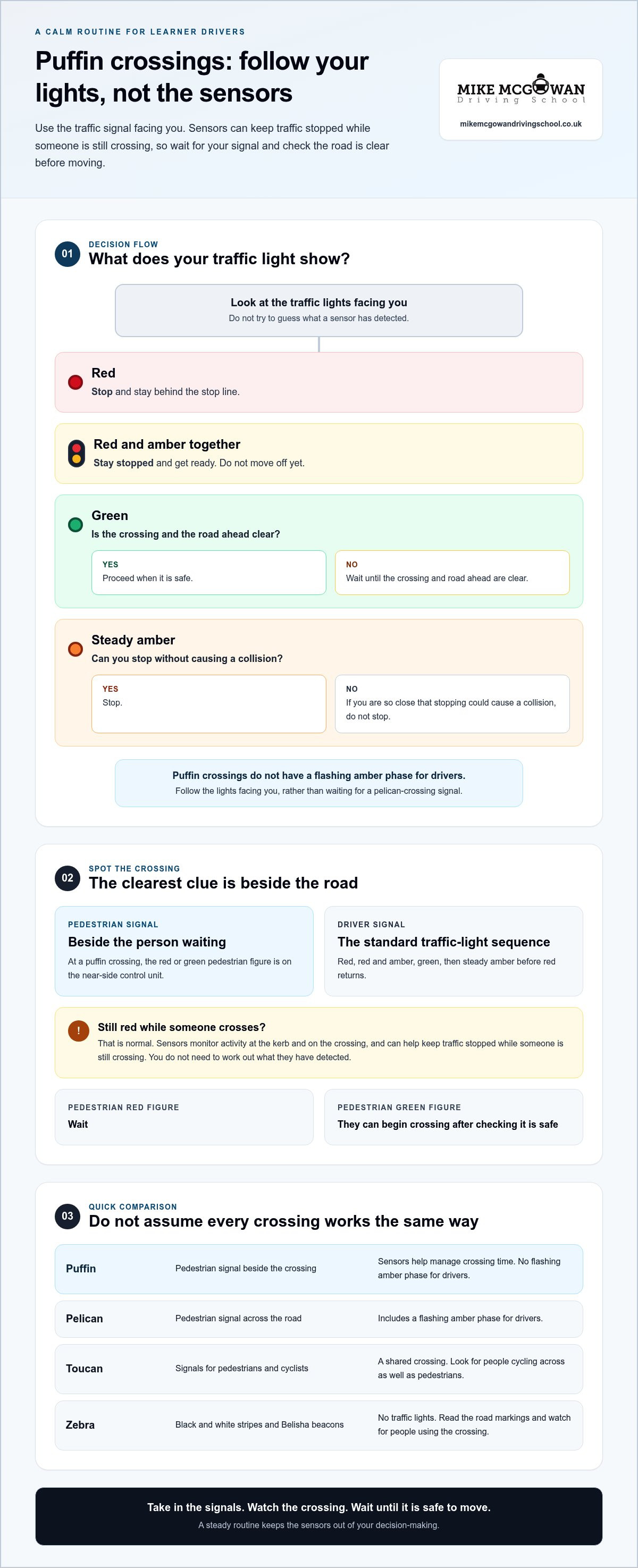
Drivers see red, red and amber together, green, then steady amber before red returns. Red means stop. Red and amber means stay stopped and get ready, not move off. At green, proceed only when the crossing and the road ahead are clear. At amber, stop unless you’re so close that stopping could cause a collision.
Pedestrians see a red or green figure on the control unit beside them. Red means wait; green means they can begin crossing after checking it’s safe. There’s no flashing amber phase for drivers, so follow the traffic lights facing you rather than waiting for one.
Why is the pedestrian signal beside the crossing?
The near-side signal lets pedestrians check the instruction while looking towards approaching traffic. They don’t need to turn their attention to a signal on the far side of the road. This is the main visual difference from crossings where pedestrian signals are displayed across the road.
As a driver, you don’t need to interpret the pedestrian signal or judge how long someone needs to cross. Watch your own lights and give people time to finish crossing. If you’re unsure what will happen next, stay behind the stop line and follow the traffic signal.
How do puffin crossing sensors work?
Sensors monitor whether pedestrians are waiting or still crossing. This helps the crossing respond to pedestrian activity instead of relying only on a fixed crossing time. The practical point for drivers is simple: follow the traffic lights. You don’t need to work out what a sensor has detected.
Kerbside sensors can detect someone waiting to cross. If that person walks away before the crossing phase begins, the request can be cancelled. Other sensors monitor the crossing itself and can help keep traffic stopped while a pedestrian is still making their way across.
What do the sensors detect?
The sensors respond to pedestrians at the kerb and on the crossing. Their purpose is to help the signal timings reflect what’s happening, including when someone takes longer to cross.
The sensors don’t replace the traffic lights, and drivers shouldn’t use them to decide when to move. You can’t always see what they’ve detected. Keep your attention on your own signals and the road around you.
Why can the crossing phase change?
The length of a crossing phase can respond to pedestrian activity. For example, the vehicle signal can remain red while a pedestrian is still crossing. That’s normal operation, not a sign that the lights have stopped working or that you should move off.
It can be tempting to anticipate a change if the crossing looks quiet. Don’t. Wait for your signal, then proceed only when it allows you to move and the road ahead is clear. If the lights stay red longer than expected, remain calm and wait.
The sensors manage the crossing, so you don’t need to add them to the list of things to monitor. Keep to a steady routine: observe the traffic lights, look for pedestrians and wait for permission to move. To practise this with calm guidance, you can arrange a driving lesson and work through real road situations at a comfortable pace.
Puffin, pelican, toucan and zebra crossings: what is different?
The quickest way to tell these crossings apart is to look at the pedestrian signal and the crossing itself. A puffin crossing has a near-side pedestrian signal and sensor-controlled timing. The other types use different signals or road markings, so don’t assume they all follow the same sequence.
| Crossing type | Pedestrian signal or cue | Control and learner cue |
|---|---|---|
| Puffin | Signal beside the crossing | Traffic lights use sensors to help manage crossing time. There’s no flashing amber phase for drivers. |
| Pelican | Signal across the road | Signal-controlled, with a flashing amber phase for drivers. |
| Toucan | Signals for pedestrians and cyclists | A shared crossing. Look out for people cycling across as well as pedestrians. |
| Zebra | Black and white stripes and Belisha beacons | No traffic lights. Read the road markings and watch for people using the crossing. |
How is a puffin crossing different from a pelican crossing?
The signal position is a useful clue. At a puffin crossing, pedestrians see the red or green figure on the control unit beside them. At a pelican crossing, the pedestrian signal is across the road.
The driver signals differ too. Pelican crossings include a flashing amber phase after red, but puffin crossings don’t. At a puffin crossing, don’t wait for a flashing amber light or expect the pelican sequence. Follow the traffic lights in front of you.
How do toucan and zebra crossings compare?
Toucan crossings are shared by pedestrians and cyclists, so look out for either crossing. Zebra crossings are identified by their striped road markings and Belisha beacons. They aren’t controlled by traffic lights, which makes them easy to distinguish from a signal-controlled crossing.
These visual cues help you identify the crossing, but they aren’t a reason to rush your decision. Spot it early, check the signals or markings, and give yourself time to respond. If you’re unsure, slow down safely and keep observing.
How should you approach and drive through a puffin crossing?
Use a steady routine: look ahead, read the signals, stop when required, then move only when the lights allow and the crossing is clear. You don’t need to predict when the lights will change. Give yourself time to observe and respond without rushing.
- Observe early. Look for the crossing, traffic lights, pedestrians and vehicles around you. Ease off the accelerator as you assess the situation, and avoid sudden braking.
- Respond to the signal. At red, stop behind the stop line. At red and amber together, remain stopped and prepare to move, but don’t go until the light turns green.
- Wait and keep watching. Check the crossing and the traffic around you. Someone could still be crossing, even if the pedestrian signal has changed.
- Move when permitted. At green, proceed only if the way ahead is clear. Keep looking for pedestrians and be ready to wait if anyone is still crossing.
What should you do as you approach?
Start observing while you still have time to make a smooth decision. Check the traffic lights, the stop line and whether anyone is waiting or already on the crossing. Keep an eye on vehicles behind and beside you too, so your response fits the traffic around you.
If the light is amber, stop if you can do so safely. The Highway Code says to stop at amber unless you’re so close to the stop line that stopping could cause a collision. Don’t accelerate to beat the light. Focus on the signal and your surroundings, not on trying to judge what the sensors are doing.
When can you move off again?
Red means stop. Red and amber means stay stopped and get ready. Green means you can proceed if the road ahead is clear, but you must still look for pedestrians who haven’t finished crossing. The pedestrian signal doesn’t replace your responsibility to check the crossing yourself.
Take a moment to observe before moving off. If someone is still crossing, wait calmly, even if the vehicle light has turned green. Once the crossing is clear and it’s safe to go, move away smoothly and keep scanning the road.
Practising this routine with a patient instructor can help it feel familiar on Leeds roads. One-to-one lessons give you time to talk through what you’re seeing and build confidence at a comfortable pace.
Practising puffin crossings calmly on Leeds-area driving lessons
A crossing can feel like a lot to process when you’re getting used to traffic, signals and pedestrians at the same time. With a calm explanation and practice, the routine becomes more familiar. An instructor can talk you through what to look for before you reach a puffin crossing, then help you respond at a manageable pace in real traffic.
What if you feel unsure at a crossing?
It’s normal to need a moment to take in the signals and what’s happening around you. Focus on observing, follow the traffic lights and wait when required. You don’t need to work out what a sensor is doing or rush because another vehicle is waiting behind.
Once you’re through and it’s safe, talk the situation over with your instructor. Go back over what you noticed, what felt unclear and what you’d do next time. One moment of uncertainty is something to learn from. It doesn’t mean you can’t drive safely.
How can local lessons help you practise?
One-to-one lessons give you space to ask questions and talk through a crossing as it comes into view. Your instructor can explain the signals, prompt you to observe early and help you decide when to wait or proceed. As your confidence grows, you can take the lead in reading the situation yourself.
Mike McGowan Driving School provides patient, personalised automatic and manual lessons in Leeds. Crossing practice is part of learning to handle everyday road situations, not a test you have to get perfect on the first try. Lessons in Leeds, Morley and West Yorkshire help you build confidence step by step, without needing to memorise a particular crossing location.
Find out more about Leeds driving lessons and how one-to-one practice can support your progress. You can book a lesson to work through crossings with calm guidance.
Take your next crossing one step at a time
A puffin crossing is easier to approach when you know what to look for: pedestrian signals sit beside the crossing, while sensors help manage the crossing phase. Follow your traffic lights, stay observant and wait for pedestrians to finish crossing before moving on.
The same calm routine helps you tell puffin crossings apart from pelican, toucan and zebra crossings. Look early, take in the signals and road markings, then respond without rushing. If you’re unsure, wait and observe so you have time to make a safe decision.
Mike McGowan Driving School offers one-to-one automatic and manual lessons in Leeds with a DVSA-approved instructor. Patient coaching is tailored to your needs, helping you practise real road situations at a comfortable pace. Confidence grows through practice, one situation at a time.
You don’t need to get every decision perfect straight away. Keep practising, and each crossing can feel more familiar.
Frequently Asked Questions
What is a puffin crossing?
A puffin crossing is a signal-controlled pedestrian crossing that uses sensors to monitor pedestrian activity. Its red and green pedestrian signals are on the control unit beside the road, so people can watch approaching traffic while checking the signal. Sensor information can affect how long the crossing phase lasts. As a driver, you don’t need to interpret the sensors. Follow the traffic lights facing you and keep checking that the crossing is clear.
How do you know when to go at a puffin crossing?
Follow the traffic lights facing you, not what you think the sensors are doing. Stop at red and stay stopped at red and amber. Green means you can go if the way ahead is clear. At amber, stop unless you’re so close to the stop line that stopping could cause a collision. Before moving off, check for pedestrians still crossing and other road users nearby.
Does a puffin crossing have a flashing green man?
No. A puffin crossing doesn’t use a flashing green pedestrian figure phase. Its red and green pedestrian signals are on the control unit beside the crossing, and sensors help manage the crossing phase. The flashing green figure is associated with pelican crossings. As a driver, respond to the traffic lights facing you and keep observing the crossing rather than relying on the pedestrian signal.
What is the difference between a puffin and a pelican crossing?
The main visual difference is where pedestrians see their signal. At a puffin crossing, it’s beside the road; at a pelican crossing, it’s across the road. Puffin crossings use sensors to help manage crossing time and don’t have a flashing amber phase for drivers. Pelican crossings do have a flashing amber phase. Don’t expect that pelican signal sequence at a puffin crossing.
What should I do if someone is still crossing when the lights change?
Keep observing and follow the traffic lights facing you. Don’t assume the crossing is clear just because a signal changes. Check that pedestrians have finished crossing and that the road ahead is clear before moving on. If you’re learning and feel unsure, wait for a safe moment, then talk through what happened with your instructor. Needing a moment to assess the situation is a normal part of learning.
Can I practise puffin crossings during driving lessons in Leeds?
Yes. One-to-one automatic and manual lessons in Leeds can help you recognise the signals, approach at a sensible pace and respond without rushing. A DVSA-approved instructor can explain what’s happening as you meet real road situations and tailor the coaching to your needs. You can ask questions and work through anything that felt unclear. This practice helps make crossings a familiar part of building confidence on the road.
Disclaimer
This article is intended as general guidance for learner drivers and does not replace official DVSA advice or a lesson with a qualified instructor. Rules, test requirements, and local test centre procedures can change, so always check GOV.UK or speak to your instructor for the most current information. Mike McGowan Driving School accepts no responsibility for outcomes based solely on the content of this article.

Frequently Asked Questions
Q:
Do I need any experience before my first lesson?
No experience is needed at all. Whether it's your very first time in a car or you're starting over after a break, lessons are tailored to your level. You’ll be supported from the very first turn of the wheel.
Q:
What kind of car will I learn in?
You’ll learn in a modern Toyota Yaris Hybrid with automatic transmission. This car is smooth, quiet, and ideal for learners who want to focus on road awareness without worrying about gears.
Q:
I’m nervous about driving. Can you help?
Absolutely. Many learners feel nervous at first. Mike specialises in creating a relaxed, judgment-free environment where you can build confidence at your own pace.
Q:
How do I book a lesson?
You can call or message Mike directly to arrange your first session. There’s no app or complicated portal — just a simple, friendly conversation to get you started.
Get in touch with Mike
Questions about lessons? Not sure where to start? Ready to book a time that works for you?
You are welcome to reach out anytime. Whether you're a first-time learner, coming back after a break, or feeling unsure about the process, Mike is here to help.
Every enquiry is handled with care and zero pressure. You will speak directly with Mike, not a call centre or automated system.
Send a message or call today. Friendly support and honest answers are just one step away.
07344 035280
Lewisham Ct, Morley
- Monday - Friday, 8:00 am - 5:00 pm
Get In Touch

Follow Us
Follow Us
Mike McGowan Driving School
Calm, one-to-one driving lessons across Leeds in manual and automatic vehicles. Learn with a DVSA‑approved instructor who specialises in automatic lessons and helps nervous learners build real confidence, at a pace that works for you.
Incorporated 2011 • Based in West Yorkshire (Leeds / Morley)
Call Mike: 07344 035 280
Hours: Monday–Friday, 8:00am–5:00pm
Pick-up area: Leeds and surrounding areas (West Yorkshire)
Services
More
Contact Us
07344 035 280
Lewisham Ct, Morley
- Monday - Friday, 8:00 am - 5:00 pm
© Copyright 2026. Mike McGowan Driving School.. All rights reserved.
Need Meta Ads that drive real bookings and sales? Work with FoundUB4