Contact Us
07344 035280
Follow Us:

Driving Tips & Support

National Driving Franchises vs Independent Instructor in Leeds: Which Fits You?
When comparing national driving franchises vs independent instructor Leeds options, a national badge doesn’t automatically mean better lessons. The practical difference often comes down to who teaches you, how consistently you learn and whether the teaching suits you.
It’s fair to wonder if you’ll keep the same instructor, make steady progress and feel comfortable on Leeds roads. The business label alone can’t guarantee the right fit. A franchise offers a recognised name, while an independent instructor runs a locally operated business. What matters most is clear teaching, a pace that works for you and a good working relationship.
This guide compares lesson continuity, local knowledge, personal support and how costs relate to progress. Mike McGowan Driving School is an independent Leeds school offering calm, personalised, one-to-one lessons. Whether you’re starting out in Leeds or Morley, returning after a break or preparing for your test, use the points below to decide what matters most to you.
Key Takeaways
- Both a franchise and an independent instructor can provide professional tuition. Focus on whether the teaching relationship feels steady and suits the way you learn.
- Consider how familiar your instructor is with the roads you’ll practise on around Leeds, Morley and nearby West Yorkshire.
- Compare continuity, teaching fit, local knowledge and booking arrangements rather than choosing on the school name alone.
- Start with the learner’s confidence, goals and preference for manual or automatic lessons. Parents can also look for clear feedback and supportive teaching.
- One-to-one lessons give the instructor space to focus on your questions, progress and pace.
National driving franchise or independent instructor in Leeds: what is the difference?
Both a national franchise and an independent instructor can provide professional tuition. Neither model is automatically better. What affects your learning is whether your instructor explains things clearly, understands your pace and helps you feel settled enough to practise.
A franchise is a local instructor working under a wider driving-school brand. An independent instructor runs a locally operated teaching business. Those labels describe how the business is set up, not the quality of every lesson. When comparing Leeds schools, look at who will teach you, how lessons are arranged and whether the instructor’s approach feels right.
What does a national driving franchise mean for a Leeds learner?
With a franchise, you book through or learn under a national brand, while your day-to-day lessons are usually with a local instructor. Some schools also use a central booking system. A familiar brand or central system can make a school easier to recognise, but the teaching experience depends on the instructor and the school’s arrangements.
My Four Wheels and similar nationwide models operate across the UK. Their names alone don’t tell you how consistently you’ll see one instructor, how lessons are planned or what happens if arrangements change. These details differ between schools. Before choosing, look at the lesson structure and the support the learner will receive, rather than assuming every franchise works in the same way.
What does learning with an independent instructor involve?
An independent school is run locally rather than as part of a national brand. You may have a direct relationship with the person responsible for your lessons, with teaching shaped around your progress. Independent instructors differ too, so the label doesn’t tell you how they teach or organise bookings.
Mike McGowan Driving School is an independent, owner-operated Leeds school. Lessons are one-to-one, with calm, personalised coaching from a DVSA-approved instructor. For a learner, the value lies in the support and continuity of the lessons, not simply in the fact that the school is independent.
An Approved Driving Instructor (ADI) is a description of the instructor’s professional status, separate from whether they work under a franchise or independently. You can read an overview of the Approved Driving Instructor (ADI) in the UK.
For beginner tuition, look for space to ask questions, practise at a manageable pace and build confidence without feeling judged. Mike McGowan Driving School offers one-to-one manual and automatic driving lessons in Leeds. Focus on the instructor you’ll learn with and the support you can expect, rather than assuming a bigger brand means a better fit.
How instructor continuity and local knowledge shape lessons around Leeds
A familiar instructor can make lessons easier to build on. They remember what you practised, what felt comfortable and where you’d like more support. That context helps the next session start with a clear purpose instead of spending time working out where to pick up.
Why a steady instructor relationship can help learners progress
After a lesson, you might have questions about a manoeuvre, a junction or a moment when you felt unsure. An instructor who knows your progress can help you raise those questions and agree what to practise next. You can also look back at earlier feedback and see which skills are becoming more manageable.
This can matter if nerves affect your concentration or you’re returning after a test that didn’t go as planned. A calm, familiar teaching relationship gives you room to talk about mistakes without feeling judged. Continuity depends on the arrangements of the particular school and instructor, not on whether the business is a franchise or independent.
What local familiarity means on Leeds roads
Local knowledge is more than knowing a route by heart. It means choosing practice that suits your current ability, then building towards a wider range of everyday driving as your confidence grows. Leeds, Morley and nearby West Yorkshire offer different settings to practise in, and lessons can progress at a manageable pace.
Traffic and road conditions change, but you don’t need to tackle every situation at once. Your instructor can help you develop skills progressively and revisit a situation when you need more practice. Test preparation can include local routes, shaped around your progress rather than treated as a fixed script.
For a learner, notice whether each session connects to the last. For a parent helping to arrange lessons, clear feedback can show what the learner is working on and what comes next. These details say more about the learning experience than a brand name on its own.
The choice between national driving franchises vs independent instructor leeds is also about how well lessons fit your needs and surroundings. In Leeds, locally focused tuition can help you practise relevant situations without treating familiar roads like a test before you’re ready. See the Leeds driving lesson area for more about local tuition.
An instructor’s professional status is separate from the business model. GOV.UK explains the training and registration process in its guide to becoming a car driving instructor in the UK. Day to day, progress also depends on how the instructor listens, gives feedback and adapts practice to you.
If you’re ready to talk through a calm, locally focused start to lessons, you can arrange an appointment.
Franchise vs independent instructor: compare the factors that affect your lessons
The national driving franchises vs independent instructor Leeds comparison is easier when you look at what lessons will feel like in practice. A well-known name doesn’t tell you whether the teaching style suits you, how feedback carries over or how bookings are handled. Those details come from the individual school and instructor.
Instructor continuity
Franchise: A larger school can have a wider instructor network, but that doesn’t tell you whether you’ll see the same instructor each time. Arrangements differ between schools.
Independent: A locally run school can offer a direct relationship with the instructor. The actual lesson arrangements still depend on that business.
Teaching fit
Franchise: You learn with a local instructor under a national name. The instructor’s way of explaining and adapting practice shapes your experience.
Independent: A direct relationship can make it easier to shape lessons around your pace. Independence alone doesn’t guarantee a particular teaching style.
Local familiarity
Franchise: A local instructor can bring knowledge of the area, whatever the size of the school.
Independent: A locally operated school can draw on local experience, but the business model alone doesn’t show how lessons use it.
Booking structure
Franchise: Some schools use central booking systems, which can provide a recognisable way to arrange lessons. The process varies.
Independent: Booking can be more direct with the person running the school. The process and lesson arrangements vary here too.
Compare teaching style and support, not just the school name
Think about what helps you learn: calm explanations, time to repeat a manoeuvre or a focused test-preparation session. One-to-one tuition keeps the lesson centred on your questions and progress. If you’re nervous, notice whether you feel able to say when something isn’t clear and ask to practise it again.
Lesson price matters to a learner or parent managing a budget, but it doesn’t show how quickly skills develop or whether the teaching is a good fit. Consider what you get from the session: useful practice, clear feedback and a next step you understand. A lower price is less useful if you leave unsure what to work on.
Compare practical arrangements without assuming one model is uniform
Consider how the instructor builds on previous feedback, what happens if lesson arrangements change and how you’ll know which skills need more work. Booking systems, lesson formats and instructor arrangements vary between schools. Don’t treat assumptions about a franchise or independent business as facts about the tuition you’ll receive.
The GOV.UK Driving Instructor Code of Practice sets out professional conduct for instructors. Use it as a reference point, then focus your comparison on the support and lesson structure that suit you. To discuss learning with Mike McGowan Driving School, you can arrange an appointment.
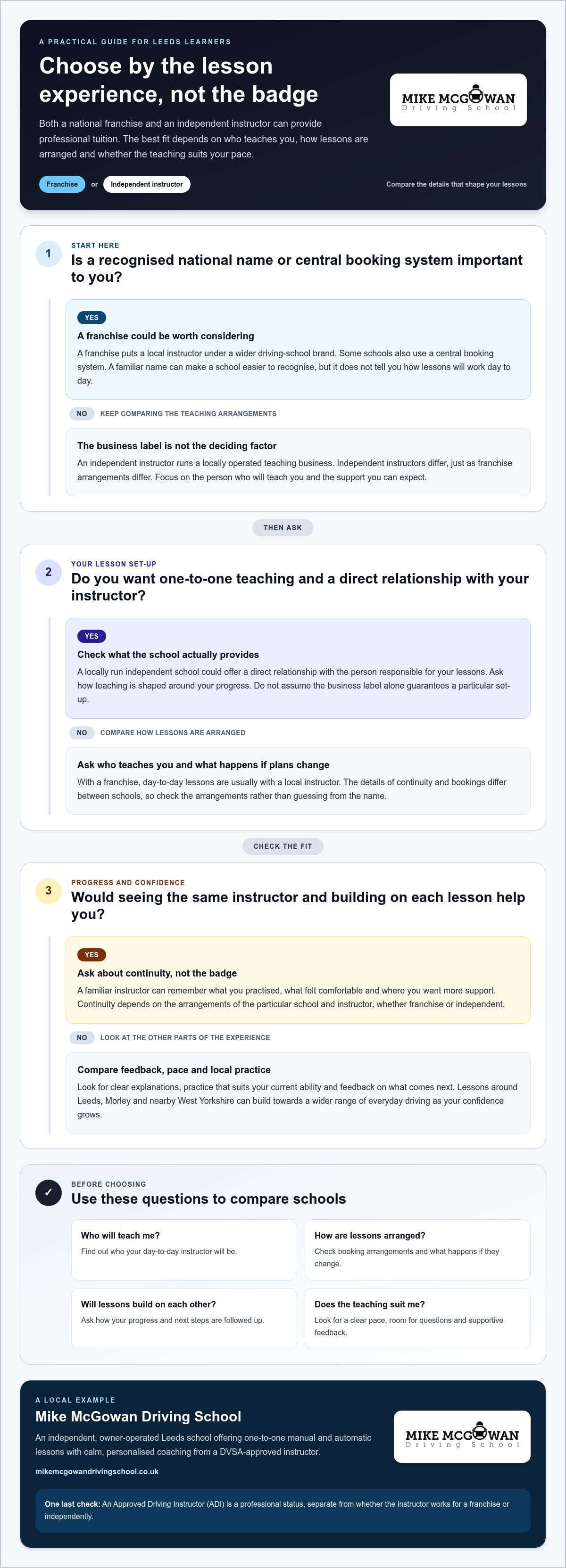
How learners and parents can choose the right Leeds tuition set-up
Start with the learner, not the school logo. The right set-up suits their confidence, goals and preferred way of learning, with teaching that feels clear and supportive. Use these steps to decide what matters before comparing schools.
- Be honest about how learning feels. Is the learner new to driving, nervous behind the wheel, returning after a break or preparing for a test? Someone who feels anxious could value calm explanations and time to ask questions. A learner preparing for a test may want focused practice on the areas they still find uncertain.
- Choose the transmission that fits their goals. Decide whether manual or automatic tuition is the better match. Think about the kind of driving the learner wants to do and which option they feel ready to learn in. The best choice supports their aims, not someone else’s preference.
- Look for a comfortable teaching fit. The learner should feel able to say when an explanation hasn’t clicked, ask for another attempt or talk about a mistake without embarrassment. That comfort is a useful sign that the instructor’s approach could work for them.
- Agree how progress will be discussed. The learner and parent can talk about lesson goals, feedback and a realistic pace. Clear feedback should help the learner understand what they’re practising and what to focus on next.
- Compare value, not just the lesson price. Cost matters, especially when a family is paying. Consider whether the learner understands the feedback and feels each lesson has a clear purpose. No single lesson count or timeframe suits everyone, so avoid judging progress against someone else’s experience.
Make the decision together
For parents, supporting the choice doesn’t mean taking over. Ask the learner what helps them feel settled, then compare that with the teaching and feedback they receive. Brand recognition can be reassuring, but it doesn’t show whether the learner feels listened to or understands what they’re working towards.
If confidence is a concern, the learner can say so early and explain what would help, such as taking a manoeuvre slowly or revisiting a road situation. A patient instructor can use that information to shape practice around the learner’s needs. Feeling nervous doesn’t mean someone can’t learn. It gives the instructor useful information for setting a comfortable pace.
There’s no need to decide based on the national driving franchises vs independent instructor Leeds label alone. Compare the learner’s goals, the clarity of feedback and how comfortable they feel asking questions. If the learner changes instructor during training, a clear summary of what they’ve already practised can help the next lessons pick up usefully.
A calm first conversation is a practical way to talk through the learner’s goals and what would make lessons feel manageable.
What learning with Mike McGowan Driving School in Leeds looks like
Lessons can start from where you are now, whether you’re beginning from scratch, returning to driving or working towards a practical test. You don’t need to feel confident straight away. Start by identifying what already feels comfortable and what you’d like to practise next.
A calm, personalised approach for new and nervous learners
You can speak openly about the parts of driving that are on your mind. Perhaps you’re worried about making a mistake, unsure how to approach a manoeuvre or uneasy about a particular type of road. Naming the concern gives you and your instructor something clear to work through, one step at a time.
For example, you could revisit a skill that felt rushed before or talk through what happened during a difficult moment behind the wheel. There’s no need to pretend you’re comfortable when you aren’t. If anxiety is affecting your confidence, these practical steps for driving anxiety offer further ideas to consider.
Driving lessons in Leeds give you the chance to work on the skills that matter to your own learning, rather than measuring yourself against another driver’s progress. Asking a question, pausing or requesting another attempt can all be part of learning.
Lessons shaped around your next steps
If you’re learning for the first time, your focus can move from getting comfortable with the basics to handling a wider range of driving situations. If you’ve had a break, refresher lessons can help you identify what still feels familiar and what needs attention. For test preparation, Mike McGowan Driving School offers sessions focused on the areas you want to strengthen, with local Leeds routes included in your practice.
There’s no fixed lesson count or guaranteed outcome. What matters is having a clear idea of what you’re practising and being able to discuss what would help next. Clear next steps can make learning feel more manageable for both the learner and the parent supporting them.
Take your next step at a pace that feels right
You don’t have to plan every lesson before you begin. Start with one clear aim, such as feeling more settled in the car, revisiting a particular skill or understanding what to work on next. That gives the first conversation a practical starting point.
If you’re still weighing national driving franchises vs independent instructor Leeds options, focus on the support that would help you feel ready to learn. The learner can share what feels uncertain, while a parent can help make space for steady progress without setting a fixed deadline. Taking learning one step at a time is fine.
A calm first conversation can help you decide whether the teaching approach feels comfortable and suited to your needs. Bring the questions that matter to you, whether you’re a learner or a parent helping to arrange lessons.
Your confidence can grow lesson by lesson, at a pace that works for you.
Frequently Asked Questions
Are independent driving instructors in Leeds cheaper than national franchises?
Not necessarily. Compare the full terms, not just the headline lesson rate. Check how long each lesson lasts, whether block bookings have conditions and what the cancellation policy says. If you’re paying as you go, work out what fits your budget before settling into a schedule. A simple record of lesson dates and spending can help you keep track of the total cost.
Can I keep the same driving instructor throughout my lessons?
That depends on the school’s arrangements and the instructor’s schedule. If consistency matters to you, raise it before lessons begin and ask how your progress is recorded. A brief note after each session can help: write down the skill you practised, what you want to revisit and any questions for next time. That gives you a useful reference if a lesson is rearranged or your instructor changes.
Is an independent driving instructor as qualified as a franchise instructor?
The business model alone doesn’t establish an instructor’s qualification. Check the individual instructor’s professional status through the DVSA’s official instructor register rather than relying on a school’s branding. You can also note the instructor’s name and ask how they prefer learners to raise questions about progress. This gives you practical information about the person teaching you and how you’ll discuss your learning.
What happens if I want to change driving instructors part-way through learning?
You can decide that a different instructor is a better fit. To make the handover clearer, prepare a short summary of your experience: the skills you’ve covered, anything you want to practise again and what helps you take in feedback. You don’t need to remember every detail. A few notes can help the next instructor understand where to begin and reduce the feeling that you have to explain everything from scratch.
Can a local instructor help me practise around Leeds before my driving test?
Yes. A local instructor can include Leeds roads in your preparation and adapt practice to your current ability. Tell them which kinds of situations you’ve already experienced and which still feel unfamiliar. That helps shape useful practice without assuming you need to memorise a particular route. Local preparation builds general readiness, rather than predicting exactly what you’ll encounter on test day.
Should a nervous learner choose an independent instructor or a national driving school?
Neither label guarantees the right experience, so use the first conversation to judge how comfortable it feels to speak honestly. The learner could explain one specific worry, such as stalling or approaching a roundabout, and notice whether the response is clear and respectful. You don’t need to feel completely confident before starting. Being able to talk about what’s difficult is a practical first step.
How can parents help compare driving schools for a learner in Leeds?
Help the learner make a short list of what matters, such as fitting lessons around study or work, understanding progress and keeping spending manageable. After a lesson, ask what they learned and what they want to practise next, rather than judging the session only by how confident they seemed. This keeps the learner involved and gives parents a clearer sense of whether the tuition is meeting their goals.
Disclaimer
This article is intended as general guidance for learner drivers and does not replace official DVSA advice or a lesson with a qualified instructor. Rules, test requirements, and local test centre procedures can change, so always check GOV.UK or speak to your instructor for the most current information. Mike McGowan Driving School accepts no responsibility for outcomes based solely on the content of this article.

Frequently Asked Questions
Q:
Do I need any experience before my first lesson?
No experience is needed at all. Whether it's your very first time in a car or you're starting over after a break, lessons are tailored to your level. You’ll be supported from the very first turn of the wheel.
Q:
What kind of car will I learn in?
You’ll learn in a modern Toyota Yaris Hybrid with automatic transmission. This car is smooth, quiet, and ideal for learners who want to focus on road awareness without worrying about gears.
Q:
I’m nervous about driving. Can you help?
Absolutely. Many learners feel nervous at first. Mike specialises in creating a relaxed, judgment-free environment where you can build confidence at your own pace.
Q:
How do I book a lesson?
You can call or message Mike directly to arrange your first session. There’s no app or complicated portal — just a simple, friendly conversation to get you started.
Get in touch with Mike
Questions about lessons? Not sure where to start? Ready to book a time that works for you?
You are welcome to reach out anytime. Whether you're a first-time learner, coming back after a break, or feeling unsure about the process, Mike is here to help.
Every enquiry is handled with care and zero pressure. You will speak directly with Mike, not a call centre or automated system.
Send a message or call today. Friendly support and honest answers are just one step away.
07344 035280
Lewisham Ct, Morley
- Monday - Friday, 8:00 am - 5:00 pm
Get In Touch

Follow Us
Follow Us
Mike McGowan Driving School
Calm, one-to-one driving lessons across Leeds in manual and automatic vehicles. Learn with a DVSA‑approved instructor who specialises in automatic lessons and helps nervous learners build real confidence, at a pace that works for you.
Incorporated 2011 • Based in West Yorkshire (Leeds / Morley)
Call Mike: 07344 035 280
Hours: Monday–Friday, 8:00am–5:00pm
Pick-up area: Leeds and surrounding areas (West Yorkshire)
Services
More
Contact Us
07344 035 280
Lewisham Ct, Morley
- Monday - Friday, 8:00 am - 5:00 pm
© Copyright 2026. Mike McGowan Driving School.. All rights reserved.
Need Meta Ads that drive real bookings and sales? Work with FoundUB4