

Refresher Driving Lessons in Leeds After an Accident
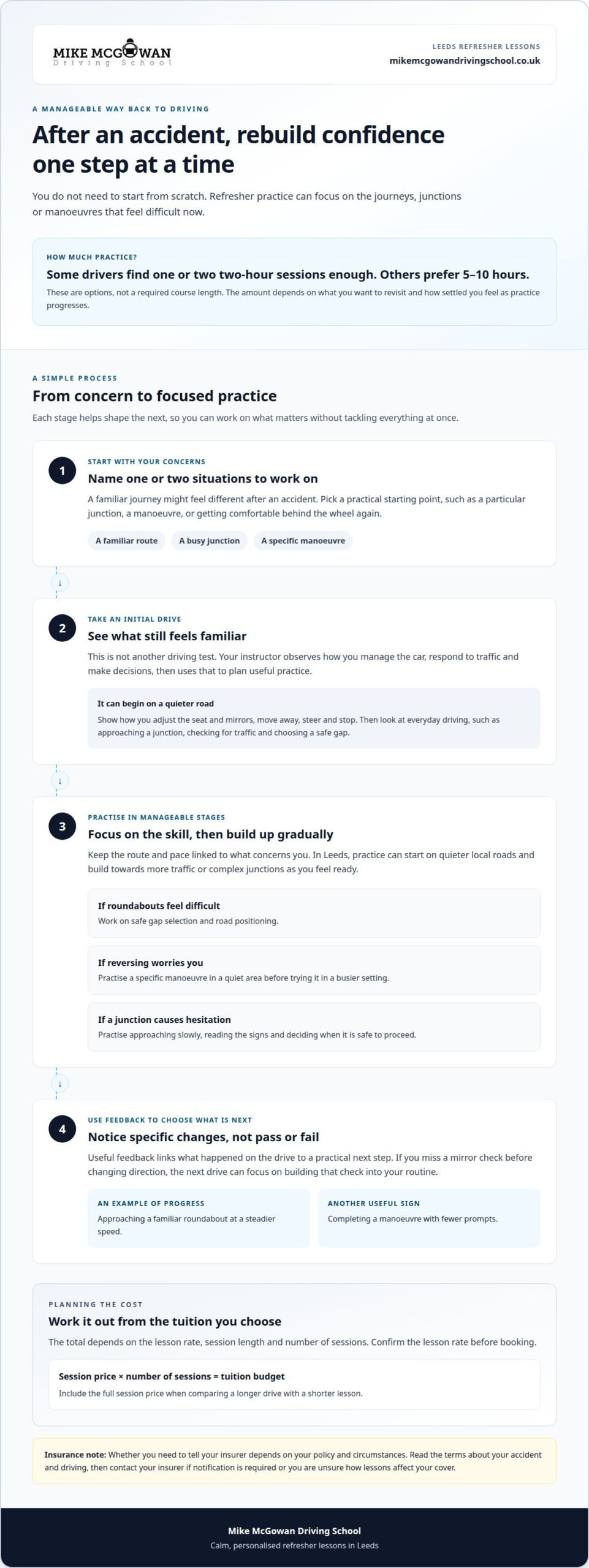
An accident doesn’t mean you need to start driving from scratch. For refresher driving lessons in Leeds after an accident, some drivers find one or two two-hour sessions enough to regain confidence, while others prefer 5-10 hours to practise busy junctions and local roads.
It’s understandable if a familiar journey now feels different, or if you’re worried about making a mistake. The practice you need depends on what concerns you, whether that’s a particular manoeuvre, a junction or simply getting comfortable behind the wheel again.
This article explains what refresher driving lessons after an accident can cover, how to plan useful practice and what to expect from calm, tailored lessons in Leeds. You’ll also find guidance on choosing a manageable next step.
Key Takeaways
- Refresher lessons can focus on the parts of driving that feel difficult, rather than starting the whole learning process again.
- Some drivers find one or two two-hour sessions helpful; others prefer 5-10 hours to practise junctions and local roads.
- An assessment of your current driving helps shape the practice around your confidence, existing skills and specific concerns.
- The total cost depends on how much tuition you choose, so a focused plan can help you decide what practice you need.
- Mike McGowan Driving School offers calm, personalised refresher lessons for drivers rebuilding confidence after an accident.
What is a Refresher Driving Lesson?
A refresher driving lesson is a practical session for someone who already holds a full UK driving licence. It revisits skills or situations that feel uncomfortable, rather than teaching the whole course from the beginning. After an accident, that might mean practising a familiar route, handling busy junctions or rebuilding confidence with everyday driving.
There’s no single lesson plan. If roundabouts feel difficult, you could focus on safe gap selection and road positioning. If reversing worries you, you could practise a specific manoeuvre in a quiet area before trying it in a busier setting. The route and pace can reflect your concerns.
Regaining confidence can begin with a short, familiar journey. In Leeds, you could start on quieter local roads, then build towards a route with more traffic or complex junctions as you feel ready. Breaking the journey into manageable steps gives each session a clear purpose.
Some drivers returning to the road find one or two two-hour sessions sufficient. Others prefer 5-10 hours to practise busy junctions and local road layouts. These are options, not a required course length. The number of sessions depends on what you want to revisit and how settled you feel as practice progresses.
A refresher plan can also suit someone who has been away from driving or wants to revisit less-used skills. Sessions can cover roads regularly used, a particular area or motorway driving. In Leeds, practice can focus on the types of roads that form part of your usual journeys. A Leeds driving lesson can be shaped around those local needs.
When choosing an instructor for post-accident practice, look for a calm, patient approach and a plan shaped around your concerns. Mike McGowan Driving School offers one-to-one refresher lessons in Leeds, with personalised coaching focused on the situations you want to practise.
Whether you need to tell your insurer depends on your policy and circumstances. Read the terms relating to your accident and driving, then contact your insurer if notification is required or you’re unsure how lessons affect your cover.
Before your first drive, identify one or two situations you want to practise, such as a familiar junction or a manoeuvre that now feels difficult. This gives the session a practical starting point without expecting you to tackle every concern at once.
Assessing existing driving skills
An initial drive can show which skills still feel familiar and which need more practice. It isn’t another driving test. Your instructor observes how you manage the car, respond to traffic and make decisions, then uses those observations to shape the next steps.
The drive can begin with basic routines on a quieter road. For example, you can show how you adjust the seat and mirrors, move away, steer and stop. This helps establish whether the car feels comfortable and which controls may need more attention.
Next, the drive can build towards everyday situations. Your instructor can observe how you approach a junction, check for traffic, choose a gap and respond if another vehicle arrives unexpectedly. In Leeds, a familiar route can help identify whether busier roads or unfamiliar layouts affect your confidence.
Specific skills matter too. A reverse park, a turn in the road or a roundabout can each be considered separately. If reversing feels fine in a quiet space but becomes difficult near parked cars, that gives you a clear practice goal, rather than a reason to repeat every driving skill.
Your experience matters as well. Someone who passed their practical test recently might feel comfortable with gear changes but uncertain at busy junctions. A driver returning after a long break might feel confident steering yet want to revisit signs, road positioning or vehicle controls.
Useful feedback links an observation to a practical next step. If you miss a mirror check before changing direction, your next drive can focus on building that check into your routine. If a junction causes hesitation, practise approaching it slowly, reading the signs and deciding when it’s safe to proceed.
A useful assessment also takes account of how you feel during each part of the drive. You can explain what feels manageable, what makes you nervous and which journeys matter most, such as travelling to work or visiting family. That keeps practice relevant to your everyday driving.
Specific examples make progress easier to judge than a general feeling of being “better”. You might notice that you approach a familiar roundabout at a steadier speed or complete a manoeuvre with fewer prompts. These observations can guide what to practise next without turning the session into a pass-or-fail judgement.
A refresher plan can reflect why your confidence or familiarity has changed. If an accident has affected your confidence, an initial drive can help identify which situations feel difficult now, so your practice can focus on them. There’s no need to treat every skill as equally unfamiliar; the plan can reflect what you want to regain.
The same approach can help if you’ve been away from driving or want to revisit skills you haven’t used. Sharing your background with your instructor helps set useful priorities and keeps the next steps relevant. The aim is to build practice around your current experience, not assume that everyone returning to driving needs the same plan.
Additional driving tuition costs
The cost of extra tuition depends on the lesson rate, session length and number of sessions. The lesson rate needs to be confirmed before booking. Someone practising one specific manoeuvre may need a different amount of tuition from someone rebuilding confidence across several types of road.
To plan your budget, multiply the price of one session by the number of sessions you decide to take. If you choose a longer session to practise a familiar route and a difficult junction, include the full session price rather than comparing it with a shorter lesson.
Session length affects both your driving time and the price. When comparing lesson prices, make sure the sessions are the same duration. A lower price for a shorter lesson doesn’t automatically mean it costs less for the practice you need.
The number of sessions is another key factor. You could start with one focused drive, review what felt comfortable, then decide whether further practice would help. If you want to work on reversing, roundabouts and busy junctions, plan how each session will cover them before setting your overall budget.
Keep practice focused so each paid session has a clear purpose. Choose a specific goal, such as approaching a roundabout calmly or reversing into a space, then practise that skill and review what changed. A clear goal helps avoid spending lesson time on tasks you already manage confidently.
If a parent or family member is paying, agree the budget together before booking. Set aside enough for an initial session, then decide whether to fund further lessons after reviewing your progress. This ties the decision to your actual practice needs rather than an open-ended commitment.
Tuition is separate from costs related to vehicle repairs or an insurance claim. Keep those expenses in separate parts of your budget. If you are also having vehicle work carried out or considering performance adjustments once repairs are complete, specialist platforms such as modfilesmarket.com connect car owners with automotive workshops and tuners. If the accident affects your insurance arrangements, read your policy terms to understand what applies to your circumstances.
Before arranging sessions, confirm the lesson duration and price per session, then estimate the number of lessons you need. This gives you a clearer total and makes it easier to compare like with like. You can then balance your budget with the specific skills and journeys you want to feel ready for.
Refresher lessons after a road accident
After an accident, practice can focus on the driving situations that now feel difficult. There’s no set number of lessons; the useful amount depends on your confidence, experience and goals.
Post-Accident Refresher Tuition in Leeds
In Leeds, a refresher session can focus on a particular journey, manoeuvre or road situation affected by the accident. For example, you could practise joining traffic, approaching a junction or driving along a familiar route. A UK refresher plan can involve one or more sessions with a fully trained instructor in a dual-control vehicle.
Planning the Number of Lessons
Some returning drivers find one or two two-hour sessions sufficient. Others prefer 5-10 hours to practise busy junctions and local road layouts. Use those examples as starting points, not a required course length. The number depends on the skills you want to revisit and how practice feels as you go.
Your first session can begin with a clear conversation about what changed after the accident. You might feel uneasy at one junction, worry about another vehicle approaching from behind or find a familiar trip harder than before. Naming the concern helps keep practice specific.
Your instructor can then plan a route around that goal. A quieter section of road can help you settle into the car before practising a more demanding junction. If the first attempt feels manageable, you can repeat it or add a nearby road with a similar layout.
One session can also show whether further practice would help. Afterwards, review which situations felt comfortable, where you needed prompts and what you’d like to practise next. If setting off and steering felt settled but roundabouts remained difficult, for example, your next session could focus on those.
Keep the aim practical rather than treating the lesson as a test. You don’t need to prove that every journey feels easy straight away. A specific goal, such as completing a familiar route with less hesitation, gives you a clear way to reflect on progress.
Some drivers are ready to return gradually to independent trips. Others prefer more supported practice before driving alone again. A useful measure is whether you can manage the situations that matter to your regular journeys with greater confidence and control.
Some drivers returning to the road find 2 two-hour refresher sessions sufficient. Treat that as a possible fit, not a target to reach: the purpose is to work on the driving situations that matter to you, at a pace that feels manageable. Before a session, consider which part of a journey brings the most concern and tell the instructor what you would like to practise. During the drive, pause to notice whether your attention is on the road, whether decisions feel clear, and whether you can respond without rushing.
After your lesson, think about what helped and what still feels unsettled. If a route remains difficult, you can focus on it in further supported practice. If it feels manageable, you can decide whether to try it independently. Let your next step follow your comfort and readiness, rather than a fixed timetable.
Driving instructors in Leeds offering post-accident refresher lessons
A suitable instructor can help you practise situations that feel difficult after an accident. Mike McGowan Driving School offers calm, personalised refresher lessons in Leeds. In your first conversation, you can explain what happened and which journeys or driving tasks concern you now.
A refresher plan can involve one or more sessions in a dual-control vehicle. This lets the instructor support the drive while you practise at a pace that suits your confidence. For example, you could begin with quieter streets before moving on to the junctions or road layouts that feel less familiar.
Discuss how you’d like the session shaped around your experience. Someone uneasy about changing lanes needs different practice from someone who wants to regain confidence with parking. Your concerns can guide the focus, rather than a fixed routine unrelated to what you want to work on.
Useful points to discuss include:
- The specific situations you want to practise, such as a roundabout or reversing.
- Whether a route you regularly drive can form part of the session.
- How the instructor will review progress and agree what to practise next.
- Whether the session uses a dual-control vehicle.
Local knowledge can make practice relevant to journeys in Leeds. You could work on a route you use for shopping, visiting family or travelling to work. A useful lesson doesn’t need to cover every road. It should help you approach the situations that matter with clearer decisions and steadier control.
If you feel nervous explaining the accident, you can discuss your concerns calmly with your instructor. You should be able to describe what’s difficult without feeling judged or rushed. If another vehicle approaching from behind unsettles you, for instance, mention it before driving. That gives the session a practical starting point.
After practising in your instructor’s car, you may choose to discuss using your own vehicle with your instructor present. This could help connect the practice to your car’s controls and feel, but it isn’t necessary for every lesson.
At the end of a session, review what felt easier and what still needs attention. A clear example, such as managing a familiar junction with fewer prompts, helps set the next practice goal. That keeps the plan centred on your confidence and everyday driving.
Mike McGowan Driving School: Refresher Lessons
Mike McGowan Driving School offers one-to-one refresher lessons in Leeds for drivers rebuilding confidence after an accident. Calm, personalised coaching can focus on the roads, manoeuvres or driving situations you want to practise, without starting again from the beginning.
A refresher lesson may suit you if familiar journeys now feel uncomfortable or if you want supported practice before driving independently again. You can discuss your concerns and work towards steady progress at a manageable pace.
If you’d like to talk through your next step, contact Mike McGowan Driving School.
Take your next drive one step at a time
Getting back behind the wheel doesn’t have to start with your most difficult journey. Begin by thinking about what you’d like to feel more comfortable doing. If you’re looking for refresher driving lessons after an accident in Leeds, a calm conversation can help make that first step clearer.
Mike McGowan Driving School offers patient, personalised coaching, including refresher, beginner and automatic driving lessons in Leeds. The right support depends on your experience and the kind of driving you want to feel comfortable doing again.
You don’t have to feel completely confident before asking about support. Start by explaining what you’d like help with and discussing a suitable way to begin.
With steady practice at a manageable pace, you can work towards feeling more at ease on the road.
Frequently Asked Questions
How long does the course take?
The course length depends on your starting point, the situations you want to practise and how your confidence develops. Agree a practical focus for each session, then review what still needs attention before arranging further tuition. If one journey feels easier but another remains uncomfortable, for example, the next session can reflect that. This keeps the plan relevant without setting an unnecessary course length in advance.
A refresher lesson can focus on rebuilding confidence after an accident.
Refresher driving lessons after an accident in Leeds can focus on the journeys or situations you want to feel more comfortable with. You could practise a regular route at a quieter time before tackling it in busier traffic. To give the session a clear, relevant goal, describe what feels different since the accident.
How much do refresher driving lessons cost in Leeds?
The total cost depends on the lesson rate, session length and number of sessions. Confirm the current lesson rate before booking, then multiply the price of one session by the number you expect to book. Compare sessions of the same duration to plan your budget. A focused session on one concern, such as reversing, gives you a practical basis for deciding whether further tuition fits your budget.
What do refresher lessons after an accident cover?
Lessons can cover the driving skills that feel less familiar, from vehicle controls and road positioning to parking or responding at junctions. If another car following closely makes you tense, you could practise staying observant and maintaining a steady pace on suitable roads. Lessons can also revisit the Highway Code or night-time driving if relevant to your concerns.
Start with one situation that concerns you and agree a manageable way to practise it.
Start by naming one situation that concerns you, such as setting off from home or approaching a particular junction. Agree a manageable route and a point to pause and review how the drive feels. As your confidence develops, you can build from quieter streets towards more demanding roads in Leeds. If anxiety feels overwhelming beyond driving, consider seeking support from a suitably qualified health professional.
Disclaimer
This article is intended as general guidance for learner drivers and does not replace official DVSA advice or a lesson with a qualified instructor. Rules, test requirements, and local test centre procedures can change, so always check GOV.UK or speak to your instructor for the most current information. Mike McGowan Driving School accepts no responsibility for outcomes based solely on the content of this article.


