Driving tuition for nervous parents in Leeds
An automatic car isn’t automatically the best choice for every nervous learner. If you’re learning to drive in Leeds, whether you’re starting out or returning after a break, the right option depends on what feels manageable and which cars you want to drive. An automatic avoids gear changes, while a manual licence normally lets you drive both manual and automatic cars. An automatic-only licence restricts you to automatic vehicles.
It’s understandable to feel unsure about busy roads, manoeuvres or failing a test. You don’t have to tackle everything at once. A steady start can focus on the skills you want to learn or refresh, then build towards more demanding situations as your confidence grows. Parents can also support you, including by helping with the cost of lessons.
This guide explains how to weigh up manual and automatic lessons, what practical test preparation can involve, and how tuition can help you feel comfortable driving around Leeds. It also covers the calm, one-to-one support available from Mike McGowan Driving School in Leeds, Morley, Tingley, Beeston and surrounding areas, helping you consider a suitable next step.
Key Takeaways
- Choose manual or automatic lessons based on the cars you want to drive and what feels manageable as you return to the road.
- One-to-one tuition can build from quieter residential streets towards busier Leeds roads at a pace that suits the learner.
- Practical test preparation can focus on the skills and situations that need more practice, including manoeuvres and familiar local routes.
- Supportive feedback and a flexible lesson plan can help nervous learners regain confidence after a break or a previous test attempt.
- Local tuition can help you practise around Leeds and nearby areas while preparing for the practical test.
One-to-one tuition from DVSA Approved Driving Instructors
One-to-one lessons give an instructor time to focus on a driver’s individual needs. In Leeds, consider the instructor’s qualifications, teaching approach and lesson availability. A parent returning after years away may need a different starting point from someone preparing for a first test.
Checking Instructor Qualifications
The GOV.UK driving instructor service lists approved instructors who choose to appear on it. A missing search result does not, by itself, show that an instructor lacks DVSA approval. Ask about their current ADI status and how they apply DVSA standards during lessons. Before starting, agree on practical goals, such as refreshing steering control or practising observations at junctions. Clear answers help you understand what the lessons will focus on.
Instructor Availability and Scheduling
Lesson availability varies, so discuss a workable routine before lessons begin. A parent with school runs, for example, might prefer a regular daytime slot, while someone working shifts may need a different pattern. Agree how long each lesson will last, where it will start and how schedule changes are handled. A consistent slot can make progress easier to follow, but the timing should fit the learner’s week.
Choosing an Instructor and Lesson Value
Good value means making useful progress, not simply choosing the lowest hourly rate. Explain what feels difficult, such as roundabouts, reversing or heavier traffic, and ask how the instructor will break those tasks down and review your progress. A clear plan helps each lesson build on the last. If the teaching feels rushed or confusing, switching instructors is a reasonable option, even partway through learning.
Lesson Packages and Hourly Rates
For Leeds in 2026, there is no single hourly rate or package total that applies across instructors. Compare the quoted hourly rate with the package total, lesson length and any booking conditions. A package suits someone who wants to plan several lessons; paying lesson by lesson can suit a learner who wants to start gradually. The Leeds driving lessons page gives a local starting point for considering tuition in the area.
Driving lessons for nervous drivers and drivers returning after time away
A nervous learner doesn’t have to master everything at once. The first lesson can identify which skills feel familiar and which need practice, such as steering smoothly, judging gaps or responding to signs. If a previous test attempt is causing worry, the instructor can focus on the situations that felt difficult. This gives the lesson a clear purpose without treating every learner the same.
Parents can support a nervous learner in Leeds by helping them choose tuition shaped around their experience and concerns. A first session might revisit everyday tasks, such as pulling away smoothly, choosing a safe position or parking near home. From there, the instructor can introduce more demanding situations when the learner feels ready. The aim is steady progress, not rushing through a fixed list of skills.
Each session can focus on one or two priorities. If reversing feels difficult, the instructor can explain the steps, demonstrate what to look for and allow time to practise. If nerves rise during a lesson, the plan can change, perhaps returning to a familiar task before trying again. This flexibility helps make the session useful without turning a difficult moment into a judgement about ability.
Lesson costs depend on the instructor’s rate and the length and frequency of lessons. Occasional sessions and regular lessons involve different overall commitments, so compare the total planned learning time as well as the hourly cost. Agreeing what each session will cover also makes it easier to see how tuition supports progress.
Manual and automatic lessons can both suit a nervous learner. The choice depends on the car they want to use and which controls feel manageable. For example, a learner unsure about coordinating gears and clutch control could consider whether automatic tuition better suits their needs. Someone who wants to drive a manual car can focus practice on those controls.
Driving tuition for nervous learners in Leeds should respond to their individual needs. A useful lesson plan can make space for concerns about parking, traffic or particular manoeuvres, then review what feels easier by the end. Parents can help by listening to what the learner found useful and supporting their next step, whether that means revisiting one skill or moving on to a new situation. Progress belongs to the learner, not to a comparison with someone else’s pace.
Preparing for the practical driving test
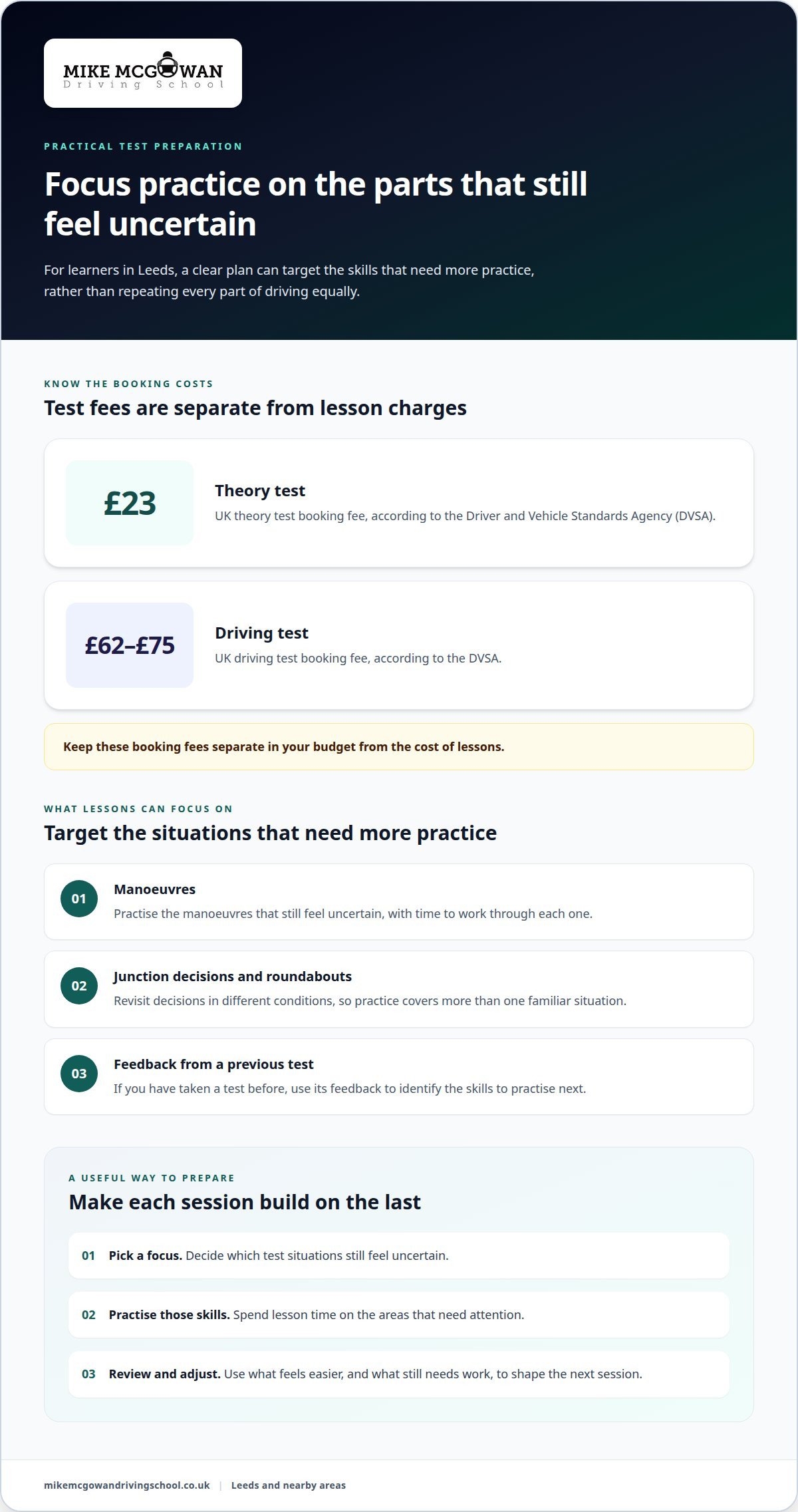
Test preparation works best when it targets situations that still feel uncertain. A lesson can focus on manoeuvres, junction decisions or roundabouts, then revisit them in different conditions. For someone who has failed before, the instructor can use feedback from the previous test to identify skills needing more practice. This turns preparation into a clear training plan instead of repeating every part of driving equally.
Budget for the test fees separately from lessons. According to the Driver and Vehicle Standards Agency, booking a UK theory test costs £23. According to the Driver and Vehicle Standards Agency, booking a UK driving test costs £62 to £75. These are test booking fees, not lesson charges, so include both in your overall plan.
Leeds learners can prepare around the centre where they expect to take the test. Horsforth Driving Test Centre recorded 12,466 car tests and 6,193 passes from April 2025 to March 2026. Leeds (Fearnville) Driving Test Centre recorded 4,676 car tests and 2,422 passes over the same period. These figures describe completed tests, not an individual learner’s likely result. Familiarity with local roads can help lessons cover relevant situations without treating one route as a guaranteed test route.
During practical preparation, an instructor can build a session around a few useful steps:
- Practise a manoeuvre slowly, then repeat it with less prompting.
- Drive through familiar junctions before adding busier traffic or larger roundabouts.
- Review observations, decisions and control after each practice drive.
This steady approach makes it easier to spot progress and choose the next skill to work on. A practice drive should develop safe, independent decisions, not memorised turns.
Theory preparation also supports practical driving. Reviewing relevant Highway Code sections refreshes your knowledge of road signs and rules. Practice questions can show which topics need another look, such as priority or road markings. A useful routine is to review one topic, answer questions on it, then discuss uncertain examples during a lesson.
Test nerves deserve space in the plan too. Rehearsing familiar routes mentally can help you remember the steps involved, while a calm lesson beforehand can keep preparation focused. A test centre’s pass figures cannot predict your result. A more useful measure is whether you can handle the required situations safely and consistently.
Support for learners returning to driving after a break
A break from driving doesn’t mean you’ve lost every skill. If you’re a nervous learner, starting out for the first time or returning after a break, lessons can help you build on what you already know and practise what feels less familiar.
Support for Nervous and Returning Drivers
You can learn to drive at your own pace, whether you’re a younger learner or returning after time away from driving. A lesson can help with a particular concern, such as judging gaps at junctions or driving in heavier traffic. In Leeds, an instructor should adapt practice to your experience and help you feel more settled as you go.
Supportive Teaching and Feedback
Helpful feedback is specific. An instructor can point out what went well, such as checking a mirror before changing position, then explain one skill to improve. Talking through an upcoming situation before you reach it can also make a route feel more predictable. If you’ve recently passed, a refresher lesson can help with unfamiliar journeys or situations that still feel uncertain.
Managing Anxiety When Returning to Driving
An instructor can help you manage anxiety by discussing concerns before setting off and agreeing a clear focus for the drive. Slow, steady breathing at the kerb can help you settle, while allowing plenty of time to get to the lesson can prevent a rushed start. If a particular junction or route feels daunting, the instructor can talk through what to expect before you reach it.
If you’re anxious about driving in Leeds, look for an instructor who listens to your concerns and explains how lessons can adapt. If you’re returning after a break, you can use lessons to revisit the skills and routes you want to feel more comfortable with. After a lesson, a short conversation about what felt easier and what still needs attention can help shape the next session. Parents can support you by listening and helping you make time to practise, without treating feedback as a judgement.
You can make a session easier to follow by agreeing on a focus before setting off. The instructor can talk through upcoming situations before you reach them, giving you a chance to consider what to expect. When reviewing the drive, feedback should start with what went well and where you’ve improved. This keeps your progress visible alongside any areas that need more practice. Linking the conversation to the agreed focus can also help you understand what to carry into another session, without treating a difficult moment as the whole story of the drive.
If you feel anxious about driving, slow, steady breathing at the kerb before setting off can be a useful coping tool. Allowing plenty of time to travel to the lesson can also help you avoid a rushed start. These preparations can go alongside a clear conversation about your concerns and what the session will cover. The instructor can talk through upcoming situations before you reach them, while feedback recognises your improvement as well as what went well. Together, these approaches keep attention on your progress and the specific support you want as you learn or return to driving.
Local driving tuition across Leeds and nearby areas
Local tuition can make practice relevant to the journeys you want to drive. Across Leeds, lessons can include familiar destinations, everyday road layouts and the decisions needed along the way. If you’re learning to drive, lessons can focus on practical aims, such as feeling comfortable on a regular journey to college, work or school. A parent can help you think about the journeys you’ll need to make, so practice has a clear purpose beyond learning a test route.
The A660 is one example of a road where awareness of other road users matters. It carries more than 1,000 cyclists a day, so drivers need to check mirrors, allow space and make careful decisions before changing position. An approved instructor can help you practise these habits in context. That local detail is useful for anyone who expects to use the road, not only learners preparing for a test.
Leeds has two relevant car test centres: Horsforth and Leeds (Fearnville). Preparation can include becoming familiar with the surroundings of your chosen centre and practising the skills needed for different road situations. It should not rely on memorising a route, as the practical test assesses safe driving rather than recall of specific turns. The centre’s location can still help shape a realistic preparation plan.
Lessons can also reflect where you live or travel. If you’re based in Morley, you might want practice for journeys into Leeds, while a learner from Horsforth could benefit from tuition that starts near home. Driving lessons in Horsforth can be part of a local plan, with practice shaped around your goals rather than a generic route.
Structured manual tuition gives each session a practical focus, such as coordinating the clutch and gears, choosing a safe position or anticipating cyclists on the A660. These local details can help make practice feel relevant to everyday life. The useful takeaway is to choose lessons that develop the skills you need for real journeys across Leeds and nearby areas, not simply a test-day routine.
Course choice is another practical consideration when planning tuition around everyday travel. A 40-hour one-week express intensive driving course in Leeds costs £1,699.00. Before choosing a concentrated format, consider whether its pace fits your availability and how much time you want between practice sessions to reflect on what you have learned. It is also worth being clear about the journeys and driving situations you want to feel more confident handling, so you can discuss those aims when arranging tuition.
For local preparation, think about the roads and destinations that matter to you, as well as the test centre you may use. Ask how lessons can address the decisions involved in your regular journeys, including safe positioning, observation and responding to other road users. Consider which situations feel unfamiliar and make them part of your learning goals. A useful plan should suit your circumstances and leave room to practise the skills you need, rather than treating a particular course format or route as the only measure of progress. That way, your tuition can reflect both your schedule and the driving you hope to do around Leeds.
Mike McGowan Driving School
Mike McGowan Driving School offers calm, personalised tuition for learner drivers of different ages, including people who feel nervous behind the wheel. One-to-one lessons give Mike McGowan time to understand what feels comfortable and what needs more practice. You can build skills at a steady pace, without feeling embarrassed about asking to go over something again.
The first decision is whether manual or automatic lessons fit your needs. Automatic lessons remove gear changes from the task, while manual lessons let you practise clutch control and changing gears. A manual licence normally permits driving both types of car, while an automatic-only licence restricts you to automatics. The best choice depends on the car you want to drive and what feels manageable as you learn.
If you’ve driven before, refresher lessons can focus on the skills you want to rebuild rather than treating you as a complete beginner. You could practise roundabouts, parking, junctions or driving on busier roads. Mike McGowan can tailor lessons to your experience and help you take each step at a steady pace. There’s no need to feel embarrassed about asking to revisit a skill.
For newer learners, beginner driving lessons offer a way to develop skills from the start. As confidence grows, practice can progress from familiar roads to more challenging Leeds routes. A lesson can focus on a particular concern, such as approaching a junction or judging when to move into traffic. Clear feedback helps you understand what went well and what to work on next.
Parents supporting a learner can help by respecting the learner’s own pace and choices. Talk together about whether manual or automatic feels like the right fit, and which situations cause the most worry. Let the learner say when something needs more practice. Progress is personal, so a calm, consistent approach is more useful than comparing one person’s learning with another’s.
Lessons can give you a practical way to build confidence on Leeds roads, whether you’re learning for the first time or returning to driving. There’s no need to have every concern figured out before taking the next step. Contact Mike McGowan Driving School if you’d like to talk about suitable lessons.
Disclaimer
This article is intended as general guidance for learner drivers and does not replace official DVSA advice or a lesson with a qualified instructor. Rules, test requirements, and local test centre procedures can change, so always check GOV.UK or speak to your instructor for the most current information. Mike McGowan Driving School accepts no responsibility for outcomes based solely on the content of this article.