Nervous Driver Refresher Lessons in Leeds for Parking
Parking doesn’t have to be the part of driving that keeps you away from the wheel. There’s no fixed number of nervous driver refresher lessons in Leeds; the right amount depends on your experience, confidence and the skills you want to practise. That can mean working on parking first, then building towards roundabouts or busier roads at a pace that feels manageable.
If parking makes you tense or a previous test has shaken your confidence, it’s understandable to want a clear plan rather than pressure to do everything at once. Refresher lessons can focus on the situations you find difficult, with time to pause, ask questions and repeat a manoeuvre until it feels more familiar.
This guide explains how to choose lessons, decide what to practise and recognise when you’re ready for a new challenge. You’ll also find practical ways to make lesson days feel calmer and build confidence steadily on Leeds roads.
Key Takeaways
- There’s no set number of refresher lessons. Use your experience, confidence and the skills you want to practise to shape a realistic plan.
- Start with the situations that feel hardest, such as parking, then build towards busier roads at a pace that feels manageable.
- Notice what makes driving around Leeds feel stressful so you can focus lesson time on the roads and situations that matter to you.
- Small preparations, like allowing time to get to your lesson and writing down questions, can help you arrive feeling more settled.
- Look for calm, personalised teaching that makes room for feedback, pauses and a clear next step.
What Driving Lessons Should I Take ?
Choose lessons around the situations you want to handle more comfortably, such as parking, roundabouts or busy Leeds roads. There’s no fixed number of refresher lessons: your experience, confidence and practice goals determine how much tuition you need.
For a practical look at parking, watch this video on the four driving test manoeuvres:
Support for driving anxiety
Lessons for nervous drivers can focus on one situation at a time. For example, practise reversing into a bay before moving on to a parallel park. Calm commentary helps you follow what’s happening as you drive, while a pause gives you room to ask about any confusing step.
When choosing an instructor, ask how they support nervous learners and decide when to introduce busier roads. Look for clear explanations and a pace that responds to your confidence, rather than pressure to tackle every challenge at once.
Returning after a driving break
After a long break, consider what you want to feel ready to do again. You might practise driving to work, visiting a familiar place in Morley or parking near home. These real journeys help make practice relevant to your daily needs.
There’s no standard price for nervous-driver refresher tuition. The overall cost depends on how many lessons you choose and which skills need attention. To plan spending, list your priorities first and discuss how each session can address them.
Instructor experience varies. For a returning or anxious driver, look for someone who can adapt explanations, listen to your concerns and give practical feedback. You can describe your previous driving experience and ask how they would approach a first session.
Choose a lesson car that suits the transmission you want to practise in. Mike McGowan Driving School offers lessons in a modern Toyota Yaris Hybrid with automatic transmission, so it’s suited to learners who want to practise in an automatic.
Busy city and ring road practice
Leeds city traffic and the ring road offer different challenges to work towards. You might first practise following signs and choosing lanes on a familiar route, then build towards a busier stretch when you feel ready. The aim is to understand each decision, not cover the whole city in one lesson.
Before selecting a route, tell the instructor where you usually drive and which junctions feel confusing. For lessons around Leeds, Morley and nearby areas, the Leeds driving lessons page covers local tuition.
Tailoring lesson numbers to experience and confidence
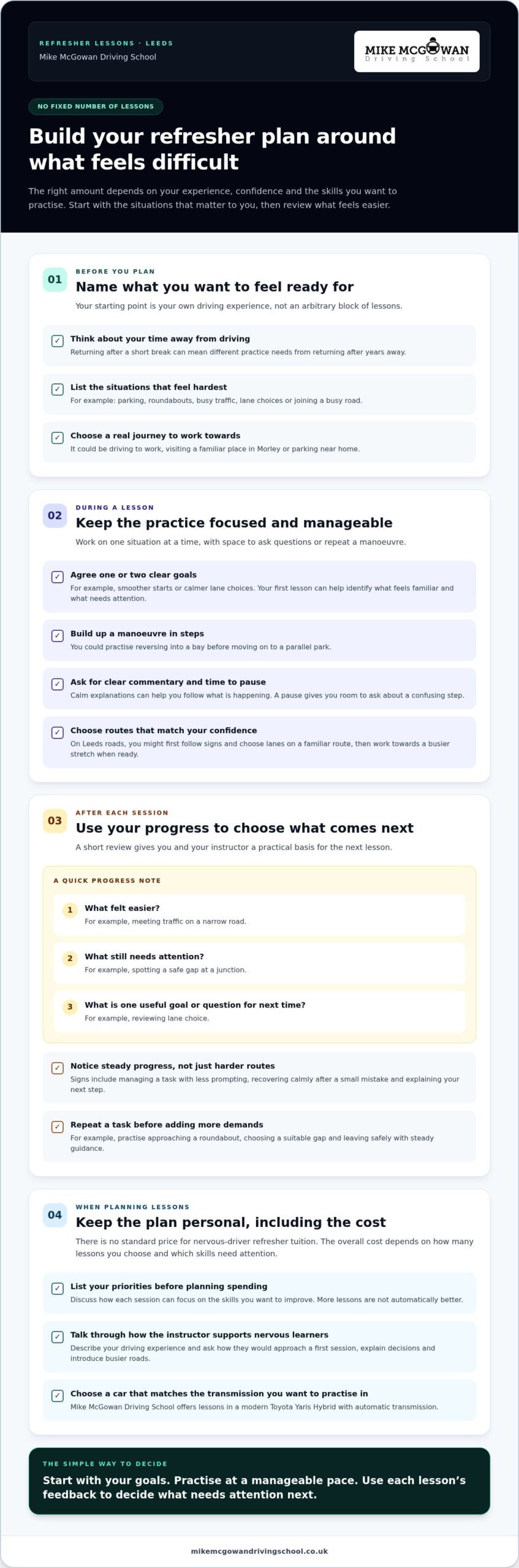
There’s no fixed number of refresher lessons. The right amount depends on your driving experience, confidence and the skills you want to practise. Someone returning after a short break will have different needs from someone who hasn’t driven for years. Start by naming the situations you want to handle more comfortably, such as parking, roundabouts or busy traffic.
Your first lesson can help identify what feels familiar and what needs attention. Agree on one or two clear goals, such as smoother starts or calmer lane choices. At the end, note what felt easier and what still needs practice. This gives you a practical basis for choosing what to work on next, rather than committing to an arbitrary block of lessons.
Confidence in busy urban traffic often depends on several separate skills. You might feel comfortable moving off but tense about choosing a lane near a junction. A tailored plan can focus on that difficulty, practise it in manageable conditions, then revisit it as part of a wider drive around Leeds.
Progress isn’t only about taking on more challenging routes. Look for signs that you can manage a task with less prompting, recover calmly after a small mistake and explain your next step. For example, if you can approach a roundabout, choose a suitable gap and leave safely with steady guidance, count that as progress. Practise again before adding more demands.
Keep a short progress journal after each session. A few notes can help you and your instructor choose useful priorities:
- Write down one situation that felt easier, such as meeting traffic on a narrow road.
- Record one sticking point, such as spotting a safe gap at a junction.
- Add a question or practice goal for the next lesson, such as reviewing lane choice.
These notes also help if you’re comparing lesson costs or planning spending with a parent. Focus on the skill you need to improve and the feedback you receive, rather than assuming more lessons are always better. If nerves rise during a session, a brief pause and a clear explanation can help you decide whether to repeat the task or move on.
After a driving test failure, separate the result from the skills you already have. Choose specific areas to revisit, then judge your readiness by consistent handling, not pressure to book another test quickly. A calm review of your progress can make the next decision clearer.
If you’d like to discuss a focused practice plan, you can arrange a driving lesson appointment and explain which situations you want to work on.
Common causes of learner-driver anxiety in Leeds
Anxiety often has a specific trigger. In Leeds, it might be joining a busy road, choosing a lane near a junction or parking while other cars wait. Naming the exact moment helps you explain what feels difficult and turn it into a practical lesson goal.
Busy traffic can make several decisions feel urgent at once. You might be checking mirrors, watching pedestrians and judging a gap near Leeds city centre. If that feels overwhelming, identify which part takes most of your attention. An instructor can then help you practise that decision in calmer traffic before adding more demands.
Unfamiliar routes can add pressure, especially after a break from driving. A missed turn or unexpected junction might make you worry about holding up traffic. Before setting off, ask where the route is heading and what situations it includes. Clear commentary about an upcoming turn gives you time to prepare rather than react at the last moment.
Parking anxiety often comes from uncertainty about space, steering or nearby vehicles. You might hesitate when reversing into a bay because you’re unsure when to turn. Break the manoeuvre into smaller actions: choose a reference point, move slowly, check around the car and pause if you need to reset. Repeating the same steps can make the task easier to follow.
A previous driving test failure can make familiar skills feel harder. You might replay a mistake at a roundabout or worry that a minor error means you’re not ready to drive. Separate the event from the skill: note what happened, identify the action you want to practise, then ask your instructor for clear feedback on that point.
Past lesson experiences can affect trust, too. If an instructor gave several directions at once, you may now feel tense before a junction. Tell your next instructor what communication helps, such as one instruction at a time or an explanation before a manoeuvre. A patient instructor listens, checks how you’re feeling and adapts explanations to support your progress.
Cost or pressure from family can add another layer. A parent paying for lessons might want quick progress, while you need time to feel settled. Agree on a specific aim before each session, such as handling a familiar route or practising one type of junction. Afterwards, note what improved and what still needs attention. That makes progress visible without treating every drive as a test.
Keep a short record of the situations that bring on anxiety, such as parking, changing lanes or meeting traffic on a narrow street. Bring the list to your next lesson and choose one priority together. A clear example gives your instructor something useful to work with and helps you see which parts of driving already feel manageable.
Lifestyle habits to support calmer lessons
Prepare by sleeping well, allowing plenty of travel time and choosing a lesson day without avoidable pressure. At the kerb, pause and breathe slowly before setting off.
Preparing for a refresher lesson
Give yourself time to reach the meeting point without rushing through Leeds traffic. If you’re travelling from Morley, allow time for the journey and to settle before getting into the car. Arriving flustered can make the first few minutes harder, so plan your route and essentials beforehand.
A good night’s sleep can help you feel more prepared for a driving lesson. Keep the morning simple: have what you need ready, check your lesson details and avoid squeezing in another stressful task beforehand. If you’re returning to manual driving, give yourself time to settle back into the clutch and gear changes.
Write down a practical aim before the lesson, such as feeling more comfortable with parking or practising a familiar route. A short note helps you explain what you want to focus on without searching for the words once you’re in the car. You can also jot down questions to discuss before setting off.
Where possible, avoid going straight from a highly stressful event into a lesson. For example, leave a gap after a difficult appointment rather than getting into the car while still distracted. If the day has become hectic, tell your instructor how you’re feeling and agree on a manageable starting point.
Managing lesson anxiety
Before moving off, stay parked and take slow, steady breaths at the kerb. Let your shoulders drop and focus on breathing out slowly. This gives you a quiet moment to notice how you feel before driving, rather than carrying the rush of the journey into the lesson.
During the drive, focus on the next clear action rather than the whole route. If a junction feels daunting, listen to the instruction, check the road and deal with that junction first. Ask for a pause if you need time to think through what happened; a short break can help you reset before continuing.
After the lesson, write a brief progress note while the details are fresh. Record a moment that went well, a part that felt difficult and a question for next time. For example, you might note that a manual hill start felt smoother, but choosing a gap at a junction still needs practice.
Use your notes to spot patterns between lessons. If travel stress keeps affecting your arrival, adjust your preparation routine. If anxiety rises around a particular task, bring that example to your next lesson and agree on a calm way to approach it.
Refresher lessons for nervous drivers
A refresher lesson is focused practice, not another driving test. Nervous driver refresher lessons in Leeds can help you assess how driving feels now and choose useful practice for everyday journeys.
Finding a Leeds refresher school
When choosing refresher tuition in Leeds, compare the teaching approach as well as the location. Look for an instructor who adapts sessions to returning drivers and can work on specific goals, rather than starting again with a beginner syllabus.
Consider what you need from the lesson car, too. If you plan to drive an automatic, practise in an automatic; if you plan to use a manual, choose manual tuition. This keeps practice relevant to the car you expect to drive. Before booking, decide whether your priority is parking, town journeys or getting familiar with the controls.
Useful nervous driver refresher lessons in Leeds should give you a practical way to assess progress. For example, note whether you feel more comfortable managing a familiar journey after practising its key sections. Don’t judge the session only by whether every task felt easy. A better measure is whether you understand what to practise next.
What the first lesson involves
The first drive can provide a starting-point assessment, not a test. You get behind the wheel and show the instructor how you currently manage everyday driving tasks. That gives you both a clearer picture of which habits feel steady and which skills need attention.
For instance, an instructor can observe how you prepare to move off, manage speed and position the car on a familiar road. You can then use the remaining lesson time for a priority such as reversing into a bay or choosing a suitable lane. A focused session avoids spending time practising skills you already feel comfortable with.
Afterwards, keep your own record of the drive. Note the route or task you practised, what felt manageable and what you’d like to repeat. This gives you a personal reference point when deciding whether another lesson would be useful. It also makes it easier to explain your progress if you change instructors later.
Refresher lessons can suit drivers returning after a break, people unsettled by a particular manoeuvre and qualified drivers who want practice before a new type of journey. They aren’t a judgement of your ability. The useful question is what you want to feel more prepared to do after the session.
Mike McGowan Driving School: Beginner Driving Lessons
Mike McGowan Driving School offers calm, personalised driving tuition for learners who want to build confidence at their own pace. If you’re starting out, Beginner Driving Lessons offer a place to develop the basics; if you’ve driven before, Refresher Lessons can focus on the skills or situations you want to practise.
Choose Manual Driving Lessons or Automatic Driving Lessons to suit the type of car you want to drive. You can explain if parking, roundabouts or busy Leeds roads feel difficult and use that as a starting point for your learning.
To talk through your next step, contact Mike McGowan Driving School directly.
Take the next step at your own pace
Choosing nervous driver refresher lessons in Leeds can make returning to driving feel more manageable. You don’t need to arrive with a perfect explanation or a complete plan. Start by saying what you want to feel more comfortable doing and what would help you feel listened to during a lesson.
It can help to decide what a useful first step looks like for you. That might mean discussing your concerns, agreeing how you’d like to receive feedback or setting an achievable practice goal. If you’re supporting a learner, ask what they want to work on before making plans together. Their confidence and input matter.
A lesson is not a judgement of your ability. It’s a chance to understand what you need and build from there, one considered step at a time.
You can start with a clear conversation and take the next step when you feel ready.
Frequently Asked Questions
Can you help with parking and roundabouts?
Yes. Refresher practice can focus on parking and roundabouts, including the part that feels difficult. For example, you can work on judging space in a car park, then practise choosing a lane and approaching a roundabout calmly. Tell your instructor which situation concerns you most, so the drive has a clear focus. You can also ask to repeat a manoeuvre or review the steps before trying again.
Who are refresher lessons for?
Refresher lessons suit drivers who already have experience but want to feel more at ease in particular situations. You might be returning after a break, feeling nervous after a test or needing parking practice before driving independently again. They can also help if your driving routine has changed and you want to rebuild familiarity. The focus is on your current needs, not starting from scratch.
Who are refresher courses for?
They’re for people who want structured support with driving skills they’ve already learned. That could be a driver who feels uneasy on unfamiliar roads, someone who wants to practise a specific manoeuvre or a returning driver who needs time to get comfortable again. Lessons can focus on one main goal or several areas. For example, you might work on parking first, then practise those skills in different places.
Can you book a single refresher lesson or do schools require a course?
There’s no fixed number of refresher lessons; the amount depends on your experience, confidence and the skills you want to practise. You can plan around a specific goal, such as becoming more comfortable with parallel parking, rather than assuming everyone needs the same course. If you have several areas to work on, adjust your plan as you see what feels settled and what still needs practice.
What areas of Leeds do refresher driving instructors cover?
Coverage depends on the instructor’s service area. Mike McGowan Driving School serves Leeds and surrounding areas in West Yorkshire, including Morley. Local practice can help you work on the kinds of routes you’ll use day to day, from quieter residential streets to busier city roads. Share your usual journeys and the situations you want to practise when planning where to focus your driving.
Can refresher lessons help drivers who have not driven for several years?
Yes. A long gap doesn’t mean you have to tackle every driving situation at once. Start by discussing what you remember and where you feel least certain, such as steering, junctions or parking. A lesson can begin on familiar, quieter roads and build from there as your comfort returns. Note any questions after each drive, so the next session can address what still feels unclear.
What experience do Leeds instructors have teaching anxious or returning drivers?
Instructor experience varies. Look for someone who listens to your concerns, adapts explanations and gives practical feedback; ask how they support nervous pupils and decide when to introduce busier roads.
Disclaimer
This article is intended as general guidance for learner drivers and does not replace official DVSA advice or a lesson with a qualified instructor. Rules, test requirements, and local test centre procedures can change, so always check GOV.UK or speak to your instructor for the most current information. Mike McGowan Driving School accepts no responsibility for outcomes based solely on the content of this article.