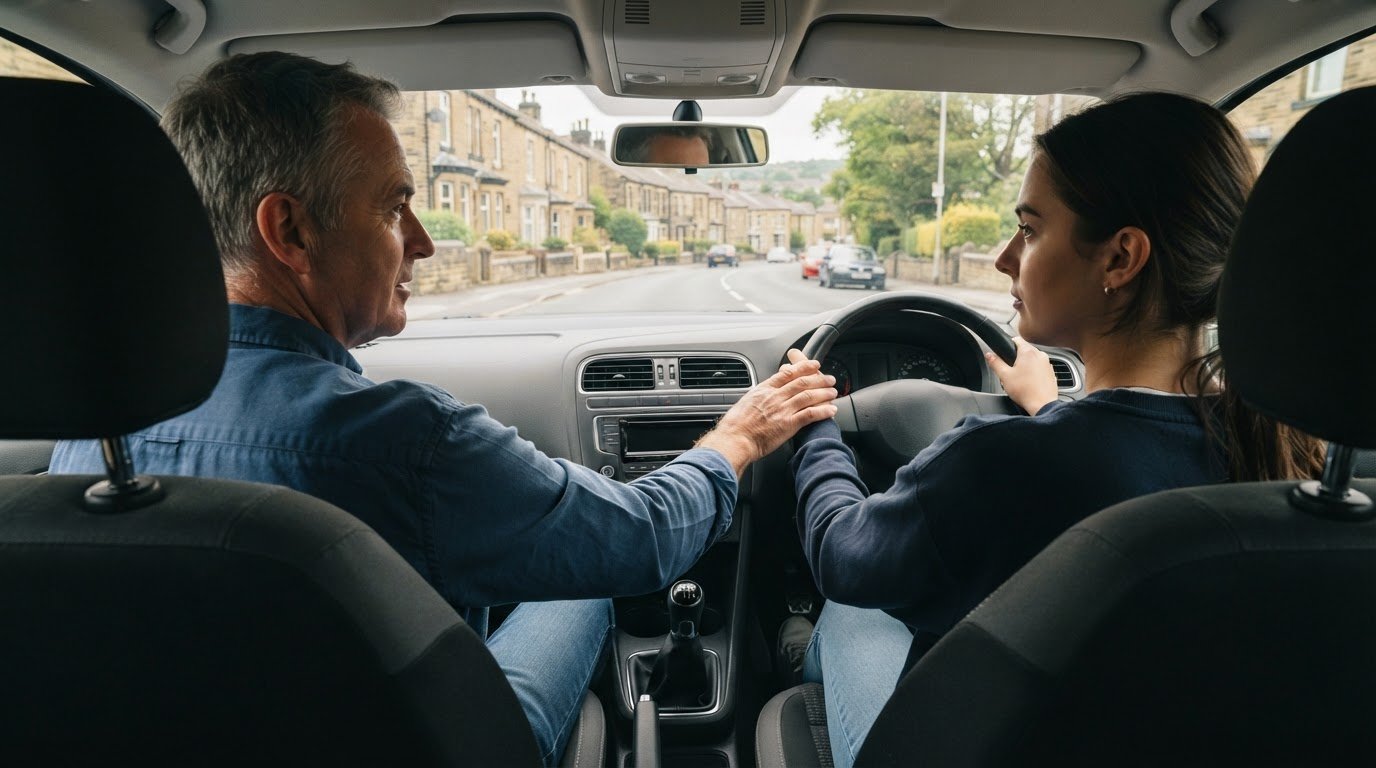
Manual gearbox driving tuition in Leeds for beginners
You can start manual gearbox driving tuition in Leeds as a complete beginner. Lessons can begin with cockpit checks and basic controls, then progress to clutch control, gear changes and road driving as your confidence grows. You don’t need to know how to drive before your first lesson.
At first, managing the clutch, gears, road and surrounding traffic can feel like a lot. That’s a normal part of learning. You’ll build these skills step by step, rather than mastering everything at once.
This guide explains what beginner manual lessons cover, from finding the biting point and moving off on hills to handling junctions, roundabouts and busier Leeds roads. It also compares manual and automatic cars, so you can choose the learning route that suits your needs.
Key Takeaways
- You can begin manual lessons as a complete beginner, starting with the controls before moving on to road driving.
- Practising the biting point and smooth gear changes helps you build control without rushing.
- Hill starts and stop-and-go traffic become easier to manage as you learn how clutch and gear choices affect the car.
- Lessons can build from quieter roads towards junctions, roundabouts and faster routes around Leeds.
- Learning in a manual car lets you drive both manual and automatic cars once you pass, while an automatic licence is restricted to automatic vehicles.
Gear changes and road positioning
Early manual lessons often start with cockpit checks and basic controls before moving on to road driving. When you’re ready, you’ll practise moving off, selecting gears and bringing your attention back to the road. In Leeds, the aim is to connect each gear change with what’s happening around you, rather than treat it as a separate task.
Gear changes can feel busy at first because your hands, feet and eyes all have different jobs. For example, you might change up as the car gathers speed on a clear, straight stretch. Preparing early, changing smoothly and looking ahead again helps the sequence become more familiar.
This video shows a beginner’s first manual lesson and clutch-control practice.
Before turning or joining another road, choose a gear that suits your speed and the situation. For example, a lower gear can help you stay in control as you slow for a junction. Your instructor can guide you through the timing, leaving you more attention for traffic, signs and pedestrians.
Road positioning develops alongside gear control. On a residential street, hold a steady line and scan for parked cars, side roads and people crossing. If an obstruction narrows the road, ease off, assess the gap and pass only when there’s enough room to do so safely. Keep looking ahead rather than down at the gear lever.
A useful practice sequence is:
- Plan: Look ahead for a bend, junction or change in traffic flow.
- Adjust: Ease off and select a suitable gear before reaching the situation.
- Position: Keep a clear, appropriate line while checking the road around you.
- Continue: Once the road opens, accelerate smoothly and change gear when needed.
That order helps you avoid last-second decisions. If a gear change feels awkward, keep the car’s path steady; another chance to practise will come. A stall or missed gear is feedback, not a reason to rush your next manoeuvre.
As lessons progress, practice can move from quieter streets to busier Leeds junctions and higher-speed roads. Each setting adds a different demand: parked vehicles on residential roads, more traffic at junctions, or earlier planning at faster speeds. You can see how lessons are approached locally on the Leeds driving lessons page.
If you hold a provisional driving licence, you can take lessons or practise, according to the UK Government. On each drive, focus on one clear task, such as choosing a gear before a turn or keeping your position past parked cars. This makes your progress easier to notice and discuss.
Clutch control and finding the biting point
The biting point is where the clutch begins to connect the engine to the wheels. As you gently lift the pedal, you may feel the car become ready to move. In a quiet practice area in Leeds, you can learn to recognise that change before adding the decisions involved in traffic.
To move off, settle your feet and hands before releasing the handbrake. Press the clutch down, select first gear, then bring the clutch up slowly. When you feel the car respond, pause your foot there and add gentle pressure to the accelerator. Continue lifting the clutch smoothly as the car moves.
Small, steady movements are easier to manage than lifting the pedal quickly. If the car judders or stalls, pause and reset rather than rushing. Your instructor can help you work out what happened, such as releasing the clutch too quickly or not giving the car enough power. Each attempt helps you get a clearer feel for the pedal.
As you learn, keep your eyes on the road and use the car’s movement as feedback. The clutch is under your left foot, and the accelerator is under your right. Don’t look down to find either pedal while moving. Looking ahead helps you track the available space, other road users and the car’s direction.
A simple practice sequence is:
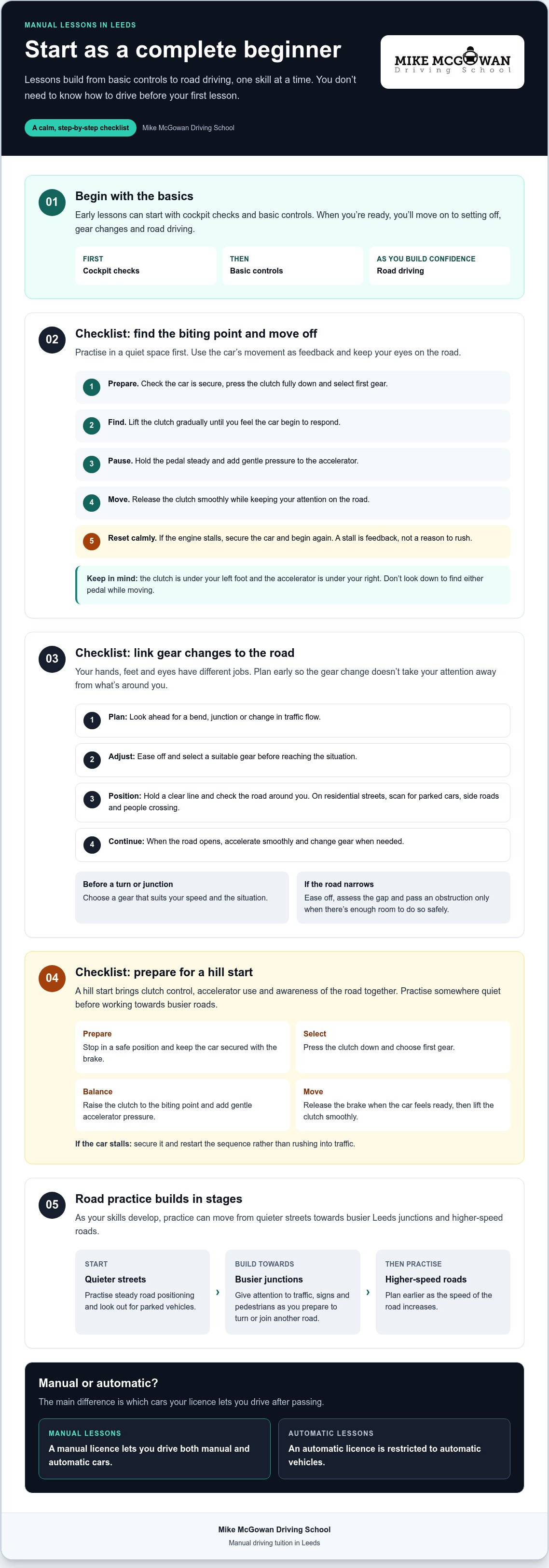
- Prepare: Check the car is secure, press the clutch fully down and select first gear.
- Find: Lift the clutch gradually until you feel the car begin to respond.
- Pause: Hold the pedal steady and apply gentle accelerator pressure.
- Move: Release the clutch smoothly while keeping your attention on the road.
- Reset: If the engine stalls, secure the car and begin again calmly.
Stopping uses the clutch differently. As you slow towards a stop, press it down before the engine struggles, then bring the car to a controlled halt. For example, when approaching a queue, reduce speed early and avoid holding the clutch partly raised while waiting. Once stopped, follow your instructor’s guidance on securing the car.
Finding the biting point can feel inconsistent at first because the car responds to how you use both pedals. Practise moving off, stopping and setting off again in a calm space before adding a junction or slope. If you’d like guided practice with these steps, you can book a manual driving lesson.
Driving on hills and in stop-and-go traffic
A hill start brings clutch control, accelerator use and awareness of the road together. On a Leeds incline, the car can roll if you release the brake before it’s ready to move. Practise the sequence somewhere quiet first, then work towards busier roads as your control improves.
Keep the car secure while preparing to move. Select first gear, find the biting point and apply gentle pressure to the accelerator. Release the brake when the car feels ready, then lift the clutch smoothly. If the car stalls, secure it and restart the sequence rather than rushing into traffic.
A clear routine makes each hill start easier to manage:
- Prepare: Stop in a safe position and keep the car secured with the brake.
- Select: Press the clutch down and choose first gear.
- Balance: Raise the clutch to the biting point and add gentle accelerator pressure.
- Move: Release the brake and lift the clutch gradually as the car travels forward.
On a descent, choose a suitable gear before the slope and keep your speed controlled. Avoid coasting with the clutch pressed down, as this removes engine braking. Your instructor can help you practise choosing a gear early, while you still have time to observe the road ahead.
Stop-and-go traffic calls for small, calm decisions. Leave space behind the vehicle ahead, slow gradually and use the clutch as the car comes to a stop. In a slow-moving queue, don’t creep forward just because another vehicle has moved. Wait until there’s room to continue safely.
Manual gear control lets you respond to changing speeds on inclines and in queues. A lower gear can help maintain control on a steep climb, while easing off early can reduce repeated braking in slow traffic. Lessons that practise one situation at a time help these choices become familiar.
When choosing a driving instructor in Leeds, look for DVSA-approved status and clear explanations at each stage. Calm, structured guidance can be especially useful when you’re learning hill starts or feel tense in traffic.
The number of manual lessons you need before your test varies with your experience, confidence, progress and lesson frequency. Regular practice can help skills settle, but readiness depends on how consistently you manage different road situations.
At Leeds test centres, practical test waiting times depend on available appointments and the dates you can attend. Slots change as they’re booked, so flexibility about dates can affect which appointment suits you.
When traffic stops on a hill, keep the car secure rather than balancing it on the clutch. Restart using the routine you’ve practised, allowing time to observe the vehicle ahead. This steady approach helps you manage the slope and the queue together.
Junctions, roundabouts and dual carriageways
Lessons in Leeds can progress from quieter residential roads to busy junctions, roundabouts and higher-speed routes. Each setting asks you to plan ahead while controlling the clutch and gears. Your instructor can introduce one new challenge at a time, so you can practise each decision before combining them.
At a junction, look well ahead for signs, road markings and traffic. Check your mirrors, signal when appropriate, position the car and adjust your speed before reaching the turn. If turning left, for example, prepare early and select a suitable gear before steering into the new road. Keep checking for pedestrians and cyclists.
A steady junction routine can help you organise the steps:
- Look: Identify the junction, signs, road markings and other road users.
- Plan: Choose your direction and check mirrors before changing speed or position.
- Prepare: Select a suitable gear and approach at a speed you can control.
- Observe: Check for a safe opportunity to move, then continue with control.
- Reassess: Once through, check your position and respond to the road ahead.
Roundabouts involve moving traffic and lane choices. Read the signs and markings as you approach, then choose a lane that matches your intended exit. Check your mirrors, signal as needed and observe traffic before entering. If traffic is flowing, wait for a safe gap rather than feeling pressured by a vehicle behind.
Choosing the right gear helps you approach a roundabout in control. Slow down early and select a suitable gear before steering through it. As you leave, check your position and build speed smoothly. Practising these decisions at different roundabouts helps you focus on traffic without trying to remember every action at once.
Dual carriageways bring faster traffic and longer views ahead. Lessons can introduce joining from a slip road, checking traffic and choosing a safe gap. Build speed in a controlled way, keep checking your mirrors and maintain a steady position once you’ve joined. Your instructor can help you practise these observations before adding a lane change or exit.
Leaving a dual carriageway also takes early planning. Look for signs to your exit, move into the appropriate lane when it’s safe and reduce speed on the exit road. Avoid braking sharply at the last moment. If you miss an exit, continue safely and follow the road rather than turning suddenly.
Nerves can rise when several things happen together, such as close traffic at a roundabout or a busy junction after a gear change. Ask your instructor to practise the specific situation at a manageable pace. After each attempt, talk through what you saw, when you chose your gear and what you might do next time.
Progressive practice can take you from residential roads to more complex junctions and higher-speed routes around Leeds. Focus on one decision at a time: observe early, choose your position, then select a suitable gear and move when the road allows.
Manual and automatic gearbox options
Manual driving involves coordinating the clutch, gears and accelerator; an automatic car changes gear for you. Your choice affects what you practise and which cars your licence allows you to drive after passing.
Compare the learning process, the cars you want to drive and the type of licence you’re aiming for. Both routes build road skills, but their controls are different.
Documents and rules for manual learners
You need a provisional driving licence to take lessons or practise, according to the UK Government. Keep it available for your learning, and make sure you’re learning in the gearbox type you intend to use for your practical test.
In the UK, passing your test in a manual car allows you to drive both manual and automatic cars. Passing in an automatic car restricts your licence to automatics. This matters if you want the option to drive a manual car later.
Leeds schools offering manual tuition
Driving schools in Leeds, including Mike McGowan Driving School, offer beginner lessons in manual cars. Compare the lesson type, how the instructor explains clutch and gear control, and whether the teaching suits your pace.
If coordinating the pedals makes you nervous, look for calm, clear instruction that progresses from basic controls to road practice. If you’d rather not change gears, automatic lessons are another option offered by driving schools in Leeds.
Manual lessons may suit you if you want to learn clutch and gear control or need to drive a manual car. Manual cars are common among older and more affordable cars in the UK, and some driving-related jobs prefer or require drivers who can operate them. These practical reasons may matter as much as how the lessons feel.
Automatic lessons remove the need to coordinate a clutch and gear changes. That can leave you more attention for observations and road decisions, especially if managing several controls feels distracting. The trade-off is the licence restriction: passing an automatic test permits you to drive automatics, not manual cars.
Cost may also affect your choice. Manual lessons and cars are described as cheaper, but the right decision depends on your priorities and the car you plan to drive. Don’t choose a gearbox based only on a broad price comparison. Consider whether you value wider licence entitlement or simpler controls.
To decide, picture a real journey you expect to make. If you’ll need to use a family member’s manual car, learn in a manual. If you’re comfortable driving only automatics, learning in one keeps gear changes out of the process. Either way, steady practice helps you build control and confidence.
Mike McGowan Driving School: Beginner Driving Lessons
Mike McGowan Driving School offers one-to-one beginner lessons in Leeds, with manual and automatic tuition. Calm, personalised coaching helps you learn the controls and build confidence at a steady pace.
If clutch control, busy junctions or hill starts feel daunting, beginner manual lessons give you time to practise each skill step by step. You can also choose automatic lessons if you’d rather not change gears, or refresher lessons if you already hold a licence and want more practice.
For an unhurried start, choose the gearbox you want to learn in and discuss what you’d like to practise. You’re welcome to contact Mike McGowan Driving School or visit the Mike McGowan Driving School website.
Take your first step at a pace that suits you
Your first lesson is a chance to begin, not a test of what you already know. Think about what would help you feel settled, such as having the controls explained clearly or taking time to get comfortable in the car. Sharing this with your instructor gives you a useful starting point.
Choosing manual gearbox driving tuition in Leeds means learning a skill gradually. You don’t need to have every decision worked out before you begin. Focus on the next step, then use what you learn to decide what you’d like to practise in future lessons.
If nerves have held you back, set a simple first goal: get familiar with the car and talk through how lessons will progress. There’s no need to compare your progress with anyone else’s. Your experience, confidence and practice all shape your pace.
Starting steadily is still starting. Give yourself room to learn, ask questions and build confidence one drive at a time.
Frequently Asked Questions
Can I start manual lessons as a complete beginner?
Yes. You can begin without having driven a manual car before. Before your first lesson, think about what you’d like the instructor to explain, such as how the controls work or what to expect during a typical drive. If you’ve had a previous lesson, mention what you remember and what felt unclear. You don’t need to prepare in advance.
Can you help me prepare for my practical driving test?
Yes. Test preparation can focus on areas where you want more confidence. Before a session, jot down situations that have caught you out, such as missing a sign or feeling rushed by another driver. After practising, note one thing that went well and one point to work on next. This gives each session a clear focus without treating a previous test result as a measure of your ability.
How much does driving tuition cost in Leeds?
The total cost depends on the lesson rate and how much tuition you book. To make a realistic budget, compare the cost of each booking with the time it covers, then decide how often you can afford lessons. If someone else is paying, agree on a budget together beforehand. Keeping a simple record of bookings and spending helps you track the cost.
Manual or Automatic Driving Lessons?
Choose the option that best fits the car you expect to use and the controls you feel comfortable managing. Think about who owns the car you’ll have access to and whether you want to practise in the same type later. You can also consider which controls feel distracting while driving. Writing down your priorities can help you choose what suits your plans.
Where can I find manual driving lessons in Leeds?
Mike McGowan Driving School offers manual driving lessons in Leeds. When comparing local options, consider whether the teaching feels patient and clear, especially if you’re nervous about starting. Think about the skills you want to practise and the support that helps you learn. To begin manual gearbox driving tuition in Leeds, contact Mike McGowan Driving School to discuss your lessons.
How much do manual driving lessons cost in Leeds?
The cost depends on the lesson rate and the length of each booking. For manual gearbox driving tuition in Leeds, work out how a session fits your budget before deciding how regularly to book. If a parent or family member is paying, agree how lesson spending will be managed. A simple record of dates and payments can help both learner and payer keep track.
What is the average hourly price for driving tuition in Leeds?
There isn’t one hourly rate for all driving tuition in Leeds. For a fair comparison, check that you’re comparing the same lesson length and gearbox type. A session total is easier to assess when you know how much teaching time it covers. This helps you compare costs without relying on a headline figure alone.
What are the pros and cons of learning in a manual versus automatic car?
To weigh up the options, picture the car you’ll use most often after learning. A manual involves coordinating more controls, while an automatic removes the need for manual gear changes. Consider whether you’ll have regular access to one type of car and how comfortable you feel managing several tasks at once. Your everyday needs can guide your decision.
Disclaimer
This article is intended as general guidance for learner drivers and does not replace official DVSA advice or a lesson with a qualified instructor. Rules, test requirements, and local test centre procedures can change, so always check GOV.UK or speak to your instructor for the most current information. Mike McGowan Driving School accepts no responsibility for outcomes based solely on the content of this article.
